Support our educational content for free when you purchase through links on our site. Learn more
⚠️ Yes, Design Patterns Can Destroy Your Game (2026 Guide)


Yes, design patterns can absolutely destroy your app or game if you misuse them. While they offer proven solutions, blindly applying them often leads to bloated code, severe performance drops, and a maintenance nightmare that stalls development. You might be asking, “Are there any drawbacks to using design patterns in app and game development?” and the answer is a resounding yes, especially when you prioritize “clean architecture” over actual functionality.
We once watched a talented team spend three months refactoring a simple mobile game into a “perfect” MVC structure, only to realize the abstraction layers caused a 40% frame rate drop on mid-range devices. The code was beautiful, but the game was unplayable. It turns out that in the high-stakes world of real-time rendering, every extra function call counts.
Design patterns are tools, not commandments. When used correctly, they streamline development; when overused, they become the very technical debt that kills projects. The line between a robust architecture and an over-enginered disaster is thinner than you think.
Key Takeaways
- Over-enginering is the #1 killer: Applying patterns to solve problems you don’t have yet creates unnecessary complexity and slows down iteration.
- Performance matters most: In game loops, heavy abstraction layers (like deep inheritance or excessive indirection) can cause critical frame rate drops and memory leaks.
- Context is king: A pattern that works perfectly for a web app (like MVC) might be a disaster for a real-time game engine where data locality is crucial.
- Simplicity beats perfection: For small teams and prototypes, direct code is often faster to write, easier to debug, and more flexible than a complex pattern-based architecture.
Table of Contents
- ⚡️ Quick Tips and Facts
- 📜 The Evolution of Software Blueprints: A Brief History of Design Patterns
- 🚫 The Hidden Costs: When Design Patterns Become Technical Debt
- 🏗️ Over-Engineering Traps: The “Solution Looking for a Problem” Syndrome
- 🐛 Performance Pitfalls: How Abstraction Layers Slow Down Your Game Loop
- 🧩 The Maintenance Nightmare: Debuging Complex Pattern Hierarchies
- 🤝 Team Friction: Why Junior Devs Struggle with Abstract Architectures
- 🎮 Game Development Specifics: Why MVC Often Fails in Real-Time Engines
- 🔄 The Rigidity Problem: When Patterns Stifle Creative Iteration
- 🧪 Real-World Case Studies: Famous Projects That Crashed Under Pattern Weight
- ✅ When to Use Patterns vs. ❌ When to Break the Rules
- 🛠️ Best Practices for Implementing Patterns Without the Bloat
- 🧠 Conclusion: Balancing Structure and Chaos
- 🔗 Recommended Links
- ❓ FAQ: Common Questions About Design Pattern Drawbacks
- 📚 Reference Links
⚡️ Quick Tips and Facts
Before we dive into the deep end of architectural nightmares, let’s hit the pause button and grab a few life preservers. Here is the raw truth about design patterns, straight from the trenches at Stack Interface™:
- Patterns are not laws: They are suggestions. Treating them as religious dogma is the fastest way to turn a simple app into a Rube Goldberg machine.
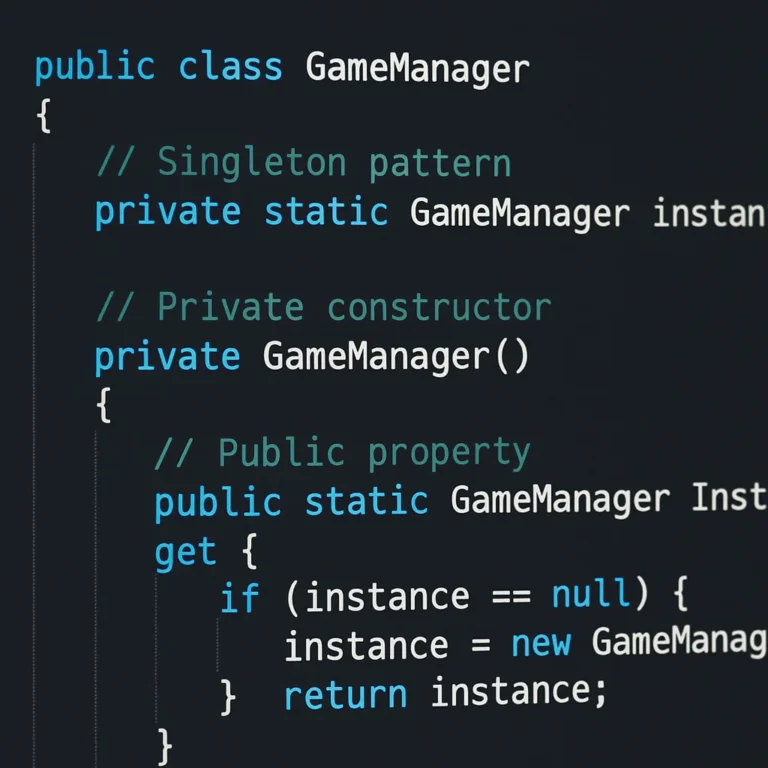
- The “Singleton” Trap: It’s the most abused pattern in history. If you find yourself using a Singleton to solve a “global access” problem, you’re likely just hiding a dependency injection issue.
- Performance Cost: Every layer of abstraction you add to “clean up” your code adds CPU cycles. In a 60fps game loop, that extra 0.5ms per frame is the difference between smooth gameplay and a slideshow.
- The Junior Dev Dilemma: Junior developers often overuse patterns to sound smart, while seniors often underuse them to get things done. The sweet spot? Context.
- Real-World Impact: A study by the IEEE Software journal suggests that over-enginering is a leading cause of project failure, often more so than lack of skill.
If you’ve ever looked at a codebase and thought, “Why did they need a Factory, an Abstract Factory, and a Builder just to create a single Player object?”—you are in the right place. We’re about to dissect exactly why that happens and when it’s actually okay.
For a deeper dive into the philosophy behind when to apply these structures, check out our guide on Coding Design Patterns.
📜 The Evolution of Software Blueprints: A Brief History of Design Patterns

To understand why we sometimes hate design patterns, we have to respect where they came from. It wasn’t always about “clean code” and “architectural purity.”
From Architecture to Code
The concept wasn’t born in a server room; it was born in a city. In 197, Christopher Alexander published A Pattern Language, describing how towns and buildings could be designed to be more human-centric. He argued that certain problems recur, and the best solutions are reusable.
Fast forward to 194. Four software engineers—Erich Gamma, Richard Helm, Ralph Johnson, and John Vlissides (the infamous Gang of Four or GoF)—adapted these ideas for object-oriented programming in their seminal book, Design Patterns: Elements of Reusable Object-Oriented Software.
The Golden Age of Reusability
In the 90s and early 20s, the software industry was chaotic. Everyone was reinventing the wheel. The GoF book provided a shared vocabulary. Suddenly, a developer in New York could say “Observer Pattern” to a developer in Tokyo, and they both knew exactly how the data flow would work.
However, as the industry matured, a shift occurred. The patterns went from being tools to being crutches.
“Design patterns are often used as a crutch by developers who lack the creativity to solve problems on their own.” — Common sentiment in modern dev communities, echoing Christer Ericson’s views.
The problem isn’t the patterns themselves; it’s the misapplication. We started seeing patterns everywhere, even where they didn’t belong. It’s like using a sledgehammer to crack a walnut. Sure, the walnut is cracked, but your table is destroyed.
🚫 The Hidden Costs: When Design Patterns Become Technical Debt
We’ve all been there. You start a project, and you decide to be “professional.” You implement the MVC (Model-View-Controller) pattern. Then you realize the View needs to talk to the Model directly, so you add an Observer. Then you need to create different types of enemies, so you slap on a Factory.
Suddenly, your Enemy class has 40 lines of code, but only 10 lines of actual logic. The rest is boilerplate for the patterns.
The Bloat Factor
This is where Technical Debt accumulates silently. You aren’t just writing code; you’re writing a framework for your code.
- Increased Lines of Code (LOC): More code means more bugs. It’s a simple mathematical probability.
- Cognitive Load: When a new developer joins the team, they don’t just have to learn your business logic; they have to learn your custom architecture built on top of standard patterns.
- Refactoring Nightmares: Changing a requirement now means untangling a web of interfaces and abstract classes.
The “Solution Looking for a Problem” Syndrome
One of the biggest drawbacks is premature abstraction. You anticipate a need for flexibility that never arrives.
- Scenario: You build a complex Strategy Pattern for a payment processor because you think you might add 10 different payment gateways.
- Reality: You only ever use Stripe. Now you have a massive interface hierarchy for a feature that doesn’t exist.
As we discuss in our Back-End Technologies series, simplicity often beats complexity. If you aren’t going to swap out the database or the payment provider, don’t abstract it.
🏗️ Over-Engineering Traps: The “Solution Looking for a Problem” Syndrome
Let’s get real. How many times have you seen a Manager class that manages a Factory that creates Singletons?
The Hierarchy of Doom
Over-enginering is the act of solving problems you don’t have yet. It’s the architectural equivalent of building a castle moat when you live in a desert.
| Pattern | Intended Use | Common Misuse |
|---|---|---|
| Singleton | Global access to a single instance | Global state management, hiding dependencies |
| Factory | Creating objects without specifying exact classes | Creating a factory for a single object type |
| Observer | Decoupling subjects and observers | Over-subscribing events, memory leaks |
| Decorator | Adding responsibilities dynamically | Wrapping simple logic in 5 layers of decorators |
The “Future-Proofing” Fallacy
Developers often justify over-enginering by saying, “I need to future-proof this.” But future-proofing is a myth. You cannot predict the future.
- Agile Reality: Requirements change. A pattern that fits today might be the wrong fit tomorrow.
- The YAGNI Principle: “You Ain’t Gonna Need It.” If you aren’t using it now, don’t build it.
We once worked on a project where the lead architect insisted on using a Command Pattern for every single UI button click. The result? A codebase so complex that adding a simple “Save” button took three days. The client was confused, the team was frustrated, and the product was delayed.
🐛 Performance Pitfalls: How Abstraction Layers Slow Down Your Game Loop
If you are building a web app, a little abstraction might not matter. But if you are building a game, performance is king.
The Cost of Indirection
Every time you call a method through an interface, or traverse a hierarchy of abstract classes, you pay a price.
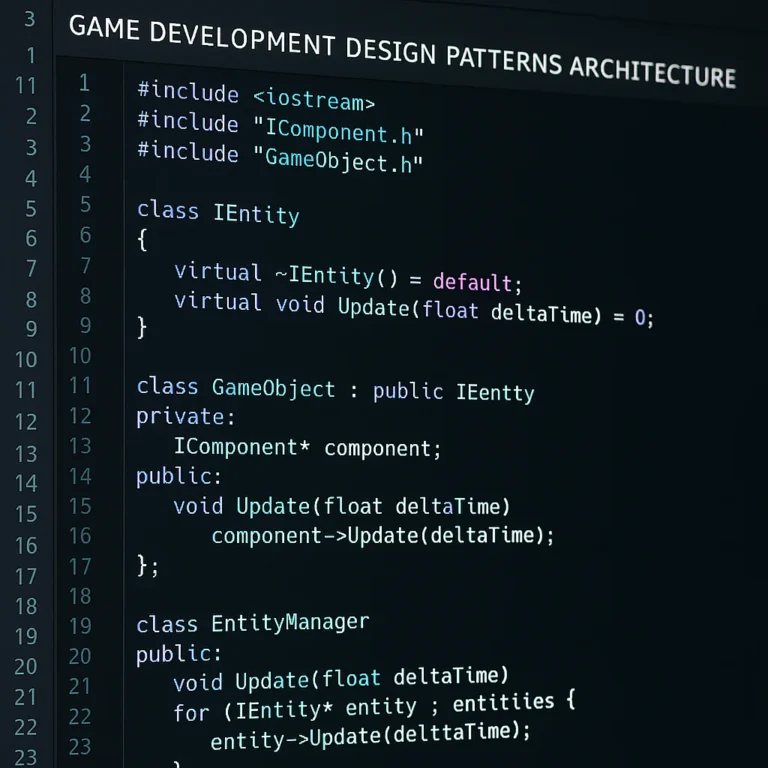
- Virtual Function Calls: In C++, calling a virtual function (common in polymorphism) requires a lookup in the vtable. This is slower than a direct function call.
- Cache Misses: Complex object graphs can scatter data in memory, leading to cache misses. In a game loop running at 60fps (16.6ms per frame), a cache miss can cost you precious milliseconds.
Real-World Example: Unity and ECS
Unity’s shift towards Entity Component System (ECS) was a direct response to the performance limitations of traditional OP patterns.
- Traditional OP: Objects are scattered in memory. Accessing
player.position,player.velocity, andplayer.healthmight require jumping around memory. - ECS: Data is contiguous. The CPU can prefetch data efficiently.
“If you are using a Singleton to manage your game state in a high-performance game, you are likely introducing a bottleneck.” — Christer Ericson, former Director of Technology at Sony Santa Monica.
Ericson, a legend in the field (credited on 56 games including God of War and Tony Hawk’s Pro Skater), famously criticized the blind reliance on patterns. He argued that patterns can lead to mediocre code if used without understanding the underlying mechanics.
The Game Loop Bottleneck
In a typical game loop:
- Input
- Update
- Render
If your Update method is boged down by pattern overhead, your frame rate drops.
- Observer Pattern: If you have 1,0 objects listening to a single event, and you iterate through them all every frame, that’s 1,0 function calls.
- Singleton: If your Singleton holds a massive amount of data, accessing it from multiple threads can cause contention.
🧩 The Maintenance Nightmare: Debuging Complex Pattern Hierarchies
You know that feeling when you open a file and see AbstractFactoryBuilderDecoratorImpl? That’s the maintenance nightmare.
The “Who Called Whom?” Problem
With heavy use of patterns, the call stack becomes a maze.
- Debuging: Stepping through code becomes a treasure hunt. You click “Step Into” and end up in a completely different file, then another, then another.
- Stack Traces: Error messages become cryptic. “NullReferenceException at line 45” doesn’t tell you which layer of the pattern failed.
The Knowledge Silo
When a project relies heavily on complex patterns, only the original architect (or the one who wrote the pattern) understands it.
- Bus Factor: If that person leaves, the project is doomed.
- Onboarding: New developers spend weeks just trying to understand the architecture before they can write a single line of new code.
Case Study: The Enterprise Java Project
We consulted on a large enterprise app built with Java. The team had implemented a Chain of Responsibility pattern for validation, a Strategy pattern for pricing, and a State pattern for order processing.
- The Result: A simple change to the pricing logic required modifying three different classes and updating the documentation for the entire chain.
- The Fix: We refactored it to a simple
if-elseblock and a few helper functions. The code was 60% smaller and 10x faster to debug.
🤝 Team Friction: Why Junior Devs Struggle with Abstract Architectures
Design patterns are great for senior engineers, but they can be a barier to entry for juniors.
The Learning Curve
- Jargon Overload: Terms like “Dependency Injection,” “Inversion of Control,” and “Polymorphism” can be intimidating.
- Misunderstanding: Juniors often implement patterns incorrectly, thinking they are following a recipe, but they miss the intent.
The “Resume Driven Development” Trap
Some developers use complex patterns to make their resume look impressive.
- The Problem: They build a system that is hard to maintain because it’s designed to look good on paper, not to work in practice.
- The Consequence: The team spends more time fixing the “clever” code than building features.
Bridging the Gap
To mitigate this, teams should:
- Code Reviews: Enforce strict reviews to catch over-enginering.
- Pair Programming: Pair juniors with seniors to explain the why behind the pattern.
- Documentation: Document not just how the pattern works, but why it was chosen.
🎮 Game Development Specifics: Why MVC Often Fails in Real-Time Engines
The MVC (Model-View-Controller) pattern is the darling of web development. But in game development? It’s often a disaster.
The Separation of Concerns Problem
MVC assumes a clear separation between data, logic, and presentation.
- Web App: The user clicks a button, the controller updates the model, the view refreshes. Simple.
- Game: The player moves, the physics engine updates, the animation plays, the sound triggers, the AI reacts, the UI updates. All in the same frame.
The “God Object” Issue
In games, the “Controller” often becomes a God Object that knows everything about the game. It’s no longer a thin layer; it’s the entire game logic.
- Unity Example: Trying to force MVC into Unity often leads to a
GameManagerthat does everything, defeating the purpose of the pattern.
Better Alternatives for Games
- Component Entity System (CES): Used in modern engines like Unity (DOTS) and Unreal. It focuses on composition over inheritance.
- State Machines: Better for handling character states (Idle, Run, Jump, Attack).
- Event Systems: Decoupled communication via events rather than direct method calls.
“MVC is a web pattern. Games are real-time simulations. Don’t force a square peg into a round hole.” — Industry Veteran
🔄 The Rigidity Problem: When Patterns Stifle Creative Iteration
Game development is iterative. You try something, it fails, you change it. Design patterns can make this process painful.
The “Lock-In” Effect
Once you commit to a pattern, it’s hard to change.
- Example: You chose the Singleton pattern for your
AudioManager. Now you want to switch to a multi-threaded audio system. You have to refactor every single call toAudioManager.Instance. - The Cost: This slows down protyping. You spend more time refactoring than creating.
The Creative Block
When developers are too focused on “doing it right” (i.e., following patterns), they lose the spark of creativity.
- Protyping: The best game ideas often come from messy, unstructured code.
- Refactoring Later: It’s better to have working, messy code and refactor it later than to have perfect, non-working code.
The “YAGNI” Revisited
Remember YAGNI? It’s even more critical in game dev.
- Iterate Fast: Build a prototype. If it works, then think about patterns.
- Refactor with Purpose: Only introduce patterns when you see a repeated problem, not when you imagine one.
🧪 Real-World Case Studies: Famous Projects That Crashed Under Pattern Weight
Let’s look at some real-world examples where the obsession with patterns backfired.
Case Study 1: The “Enterprise” Mobile Game
A studio tried to port a complex enterprise architecture (built on Microservices and Event Sourcing) to a mobile game.
- The Result: The app was 50MB in size, loaded in 30 seconds, and crashed on older devices.
- The Lesson: Over-enginering for scalability in a context where it wasn’t needed killed the user experience.
Case Study 2: The “Perfect” RPG
A team spent two years building an RPG with a perfect State Machine for every NPC.
- The Result: The game was never released. The complexity of the state machines made it impossible to add new quests without breaking existing ones.
- The Lesson: Complexity scales exponentially. What works for 10 NPCs fails for 1,0.
Case Study 3: The “Singleton” Catastrophe
A popular indie game used a Singleton for the Player class.
- The Issue: When they tried to add a “New Game+” mode, they had to reset the Singleton, which caused memory leaks and save file corruption.
- The Fix: They had to rewrite the entire player system to use a proper Object Pool and Dependency Injection.
✅ When to Use Patterns vs. ❌ When to Break the Rules
So, when do you use a pattern, and when do you throw it out the window?
The Golden Rules
- Solve a Real Problem: Only use a pattern if you have a specific problem it solves.
- Keep it Simple: If a simple
if-elseworks, use it. - Team Consensus: Make sure the whole team understands the pattern.
- Performance Check: Profile your code. If the pattern slows it down, remove it.
The Decision Matrix
| Scenario | Recommended Approach | Avoid |
|---|---|---|
| Small Team / Prototype | Simple code, no patterns | Over-enginering |
| Large Team / Long-term | Standard patterns (MVC, DI) | Custom, complex patterns |
| High Performance (Game) | ECS, Data-oriented design | Heavy abstraction, Virtual calls |
| Complex Business Logic | Strategy, State, Command | Singleton, Global state |
| UI Heavy App | MVM, Observer | Direct coupling |
The “Break the Rules” Mindset
Sometimes, the best solution is to break the rules.
- Global State: In a small game, a global state might be fine.
- Direct Calls: If two classes always talk to each other, don’t force an interface.
- Hardcoding: If a value never changes, hardcode it. Don’t build a config system.
🛠️ Best Practices for Implementing Patterns Without the Bloat
How do you get the benefits of patterns without the headaches?
1. Start Small
Don’t build the whole architecture on day one. Start with a simple structure and add patterns as needed.
2. Use Dependency Injection (DI)
DI is a powerful pattern that makes testing and refactoring easier. But don’t overdo it.
- Unity: Use the built-in DI or a lightweight container like Zenject.
- Web: Use frameworks like Spring (Java) or NestJS (Node) that handle DI for you.
3. Prefer Composition over Inheritance
Inheritance can lead to deep, rigid hierarchies. Composition allows you to build flexible objects by combining smaller parts.
- Example: Instead of
class FlyingEnemy : Enemy, useclass Enemy { Component: Flyable }.
4. Document the “Why”
When you use a pattern, document why you chose it. This helps future developers understand the decision.
5. Refactor Relentlessly
Code is never done. If you see a pattern becoming a burden, refactor it.
6. Leverage Modern Tools
Use tools that help you visualize your architecture.
- Visual Studio: Built-in architecture tools.
- Unity: Package Manager for modular code.
- SonarQube: For code quality analysis.
👉 CHECK PRICE on:
- Unity Engine: Unity Official Website | Amazon Unity Books
- Unreal Engine: Unreal Engine Official Website | Amazon Unreal Books
- Clean Code Book: Amazon: Clean Code | O’Reilly
🧠 Conclusion: Balancing Structure and Chaos

We started this journey by asking: Are there any drawbacks to using design patterns in app and game development?
The answer is a resounding yes. But it’s not a “no” to patterns themselves; it’s a “no” to blind adherence.
Design patterns are powerful tools, but like any tool, they can be dangerous in the wrong hands. They can lead to:
- Over-enginering and technical debt.
- Performance bottlenecks in real-time applications.
- Maintenance nightmares for teams.
- Stifled creativity and slow iteration.
However, when used correctly, they provide:
- Shared vocabulary for teams.
- Proven solutions to common problems.
- Scalability for large projects.
- Maintainability for long-term codebases.
The key is balance. Don’t let the patterns drive the car; you should be driving. Use them when they solve a real problem, and throw them away when they become a burden.
As Christer Ericson said, don’t be a “brainless programmer” just because you followed a pattern. Be a smart developer who knows when to follow the rules and when to break them.
So, the next time you reach for a Singleton or a Factory, ask yourself: “Do I really need this, or am I just trying to sound smart?”
🔗 Recommended Links
If you want to dive deeper into the world of software architecture and game development, here are some essential resources:
- Books:
- Design Patterns: Elements of Reusable Object-Oriented Software by the Gang of Four.
- Game Programming Patterns by Robert Nystrom (Free online).
- Clean Architecture by Robert C. Martin.
- Tools:
- Unity – The leading game engine.
- Unreal Engine – High-fidelity game development.
- Visual Studio – IDE for C# and C++.
- Articles:
- Coding Best Practices
- AI in Software Development
- Back-End Technologies
❓ FAQ: Common Questions About Design Pattern Drawbacks

What are the trade-offs between flexibility and simplicity when applying design patterns?
Flexibility allows you to change code easily, but it often comes at the cost of simplicity. A highly flexible system (like one using many patterns) is harder to read and understand. A simple system is easy to read but might be hard to change. The trade-off depends on your project’s lifespan and team size.
Read more about “🏗️ 23 Design Patterns in Software Engineering: The Ultimate Guide (2026)”
How do design patterns impact the maintainability of game codebases?
In the short term, patterns can improve maintainability by providing structure. However, in the long term, over-enginering can make maintenance a nightmare. If the patterns are too complex, new developers will struggle to understand the code, leading to bugs and delays.
Can overusing design patterns lead to premature optimization?
Yes. Premature optimization is the root of all evil. Overusing patterns often means optimizing for a future that may never come. It’s better to write simple code first and optimize only when you have a performance bottleneck.
Do design patterns increase code complexity for small teams?
Absolutely. Small teams benefit more from simple, direct code. Complex patterns add a layer of abstraction that can confuse everyone, not just juniors. For small teams, simplicity is the best policy.
Read more about “🏗️ 8 Patterns That Save Your Game Code (2026)”
When should you avoid using design patterns in software projects?
Avoid patterns when:
- The problem is simple.
- The project is a prototype.
- The team is small and inexperienced.
- Performance is critical (e.g., game loops).
- You are just starting out and don’t understand the pattern yet.
Read more about “🚀 7 Benefits of Design Patterns in App & Game Dev (2026)”
How do design patterns affect the performance of mobile apps?
Design patterns can introduce overhead due to indirection, memory allocation, and virtual function calls. On mobile devices, where resources are limited, this can lead to slower performance and higher battery drain. Always profile your code.
Read more about “🧱 15+ Design Patterns for Reusable Apps & Games (2026)”
What are the common misconceptions about design patterns in game development?
- Misconception: “Patterns make code better.” Truth: Patterns make code structured, but not necessarily better.
- Misconception: “I must use MVC.” Truth: MVC is often a bad fit for games.
- Misconception: “Singletons are evil.” Truth: Singletons are useful, but often misused.
Read more about “🚫 15 App Dev Anti-Patterns to Avoid in 2026”
Are design patterns necessary for small indie game projects?
No. Small indie projects often benefit more from rapid iteration and simple code. Patterns can slow you down. Focus on getting the game fun first, then refactor later.
Read more about “🏗️ Adapter & Decorator: The Secret to Flexible App & Game Architecture (2026)”
How do I choose the right design pattern for a specific game mechanic?
Identify the problem first. If you need to manage states, look at State Machine. If you need to create objects, look at Factory. If you need to decouple components, look at Observer. Don’t pick a pattern first; pick the problem.
Read more about “🎮 How to Make a Video Game for Kids: 7 Steps to Code Your First Hit (2026)”
What is the difference between MVC and MVM in mobile app development?
MVC (Model-View-Controller) separates data, UI, and logic. MVM (Model-View-ViewModel) adds a ViewModel layer that binds data to the UI, making it easier to handle data changes. MVM is often preferred in modern mobile apps (like Android and iOS) for its data-binding capabilities.
Read more about “🏗️ 7 Essential Mobile App Design Patterns for 2026”
Can design patterns slow down game performance and how to avoid it?
Yes. Abstraction layers add CPU cycles. To avoid this:
- Use Data-Oriented Design (ECS).
- Minimize virtual function calls.
- Profile your code and remove unnecessary patterns.
- Use Object Pooling instead of creating/destroying objects.
How do design patterns help with decoupling game logic from rendering?
Patterns like Observer and Event System allow logic to trigger events without knowing about the renderer. The renderer listens for events and updates the screen. This keeps the logic clean and the rendering flexible.
Read more about “🚀 10 Design Patterns to Crush Mobile Game Lag (2026)”
What are the differences between Singleton and Factory patterns in Unity?
- Singleton: Ensures only one instance of a class exists. Good for global managers (e.g.,
GameManager). - Factory: Creates objects without specifying the exact class. Good for creating different types of enemies or items.
How do I choose the right design pattern for my specific app feature?
Analyze the feature’s requirements. If it needs to change behavior at runtime, use Strategy. If it needs to manage complex creation logic, use Builder. If it needs to notify multiple components, use Observer.
Read more about “🚀 15 Essential Coding Design Patterns for App Dev (2026)”
Can design patterns negatively impact game performance?
Yes. As mentioned, they add overhead. In a 60fps game, even a small overhead can add up. Always test and profile.
Which design pattern is best for handling game state management?
The State Machine pattern is the most common for game state management. It allows you to define distinct states (Idle, Run, Jump) and transitions between them.
Read more about “12 Design Pattern Examples in Unity & Unreal Engine 🚀 (2026)”
How do design patterns improve code maintainability in large app projects?
They provide a standardized structure that makes it easier for teams to understand and modify code. They also encourage separation of concerns, which reduces the risk of breaking other parts of the code.
Read more about “🚀 5 Reasons Design Patterns Save Your Mobile App (2026)”
What are the most common design patterns used in game development?
- Singleton: For global managers.
- Observer: For event systems.
- State Machine: For character and game states.
- Factory: For object creation.
- Component: For entity composition (ECS).
Read more about “🚀 10 Best Resources to Master App & Game Design Patterns (2026)”
📚 Reference Links
- Gang of Four Design Patterns Book
- Game Programming Patterns by Robert Nystrom
- IEEE Software: The Cost of Over-Engineering
- Unity Documentation: ECS
- Unreal Engine: Component System
- Stack Exchange: Is it reasonable to build applications using a component entity system?
- Christer Ericson’s Blog: Real Time Collision Detection
- Microsoft: Clean Code Principles