Support our educational content for free when you purchase through links on our site. Learn more
🚫 15 Deadly Anti-Patterns to Dodge in App & Game Dev (2026)

The fastest way to avoid anti-patterns is to treat every design pattern as a conditional tool, not a mandatory rule, and to aggressively refactor code the moment it smells like a shortcut. When you ask what are anti-patterns, and how can I avoid them when using design patterns in app and game development, the answer lies in recognizing that context is king: a pattern that saves a startup might destroy a AAA game engine.
We once watched a talented team build a “perfect” Singleton architecture for a mobile game, only to watch their unit tests crumble because the global state was impossible to mock. They spent three months untangling a knot they could have avoided with a simple dependency injection setup. It turns out, 70% of project delays in software stem from these recurring bad habits rather than actual bugs.
Don’t let your codebase become a digital graveyard of “it works, so don’t touch it.” By identifying the specific traps listed below, you can build systems that scale without breaking under their own weight.
Key Takeaways
- Anti-patterns are recurring solutions that lead to negative outcomes, often masquerading as clever shortcuts or “best practices” until they cause system-wide failure.
- Context determines validity: A design pattern becomes anti-pattern when applied rigidly without considering the specific constraints of your app or game.
- Refactor incrementally: Use the “Boy Scout Rule” to leave code cleaner than you found it, rather than attempting risky, massive rewrites.
- Measure before optimizing: Premature optimization is a common trap; always profile your application to find real bottlenecks before refactoring.
- Test relentlessly: Comprehensive unit and integration tests are your safety net, allowing you to identify and fix anti-patterns without breaking existing functionality.
Table of Contents
- ⚡️ Quick Tips and Facts
- 📜 The Origin Story: How Anti-Patterns Erupted in Software History
- 🚫 The Big Bad List: 15 Devastating Anti-Patterns in App and Game Development
- 1. The God Object: When One Class Knows Too Much
- 2. Spaghetti Code: The Noodle Nightmare of Logic
- 3. The Golden Hammer: Hammering Every Nail with the Same Tool
- 4. Cargo Cult Programming: Mimicking Without Understanding
- 5. Premature Optimization: Tuning the Engine Before Building the Car
- 6. The Singleton Trap: Global State Gone Wild
- 7. Feature Crep: The Never-Ending Scope Spiral
- 8. Hardcoding: The Rigid Code That Breaks Under Pressure
- 9. The Magic Number: Unexplained Constants in the Wild
- 10. Copy-Paste Programming: The DRY Principle’s Worst Enemy
- 1. The N+1 Query Problem: Database Death by a Thousand Cuts
- 12. Over-Engineering: Building a Spaceship to Buy Milk
- 13. The Silent Failure: Errors That Whisper Instead of Shout
- 14. Tight Coupling: The Code That Can’t Let Go
- 15. The Legacy Code Graveyard: Fear of Refactoring
- 🛠️ From Ruin to Ruin: How to Refactor Anti-Patterns into Design Patterns
- 🎮 Game Dev Special: Anti-Patterns That Kill Player Engagement
- 📱 Mobile App Pitfalls: Anti-Patterns That Crash Your User Experience
- 🧪 The Detective’s Toolkit: Identifying and Diagnosing Code Smells
- 🚀 Prevention Strategies: Building Anti-Fragile Architectures
- 💡 Real-World War Stories: When Anti-Patterns Cost Us Everything
- ✅ Quick Tips and Facts
- 🔗 Recommended Links
- ❓ FAQ: Your Burning Questions About Anti-Patterns Answered
- 📚 Reference Links
⚡️ Quick Tips and Facts
Before we dive into the swamp of bad code, let’s arm you with the Golden Nuggets of wisdom that separate the juniors from the seniors. We’ve seen too many talented devs burn out trying to fix what they broke because they missed these basics.
- Anti-Patterns are not just “bugs”: A bug is a mistake in logic; anti-pattern is a recurring solution that leads to a bad outcome. It’s a trap you walk into willingly because it looks like a shortcut.
- Context is King: What is anti-pattern in a startup MVP might be a necessary evil in a legacy monolith. Don’t blindly refactor everything; understand why the pattern exists first.
- The “Code Smell” Indicator: If you hesitate to read a function, if you need a map to understand a class, or if you’re afraid touch a file, that’s a Code Smell. It’s your nose telling you anti-pattern is nearby.
- Refactoring is not Rewriting: You don’t need to delete the whole file to fix anti-pattern. Small, incremental changes (the Boy Scout Rule: “Leave the campground cleaner than you found it”) are safer and more effective.
- Design Patterns are Tools, not Laws: As the popular video on design patterns suggests, “The book is not the Bible.” Just because a pattern exists doesn’t mean you must use it. Sometimes, a simple function is better than a complex Factory pattern.
For a deeper dive into the good stuff before we tackle the bad, check out our guide on Coding Design Patterns to understand the foundation you’re trying to protect.
📜 The Origin Story: How Anti-Patterns Erupted in Software History

You might think “anti-patterns” is a buzzword from the latest AI-generated tutorial, but this concept has roots deeper than your favorite framework. The term was coined in the late 190s by Andrew Koenig in his C++ Journal column, inspired by the architectural concept of anti-patterns introduced by Christopher Alexander in his 197 book A Pattern Language.
Alexander, an architect, noticed that while there were good ways to build houses (patterns), there were also recurring, bad ways that made houses uncomfortable or unsafe. He called these “anti-patterns.” Software engineers, being the clever (and sometimes masochistic) creatures we are, adopted the term to describe the recurring bad practices in code.
In 19, the book AntiPatterns: Refactoring Software, Architectures, and Projects in Crisis by William J. Brown, Raphael C. Malveau, Hays W. “Skip” McCormick, and Thomas J. Mowbray cemented the concept. They cataloged the “bad smells” that plague software projects, from Management Anti-Patterns (like “Death March”) to Software Anti-Patterns (like “Spaghetti Code”).
Why does this history matter to you? Because it proves that human nature hasn’t changed. We still try to cut corners, we still copy-paste without thinking, and we still build “God Objects” because we’re in a hurry. Understanding that these aren’t new mistakes, but timeless traps, helps us recognize them faster.
“We are not fighting new enemies; we are fighting the same old demons, just in a new language.” — Stack Interface™ Senior Architect
🚫 The Big Bad List: 15 Devastating Anti-Patterns in App and Game Development
We promised you a list, and we’re delivering a killing spree of the worst offenders. We’ve seen these destroy projects, drain bank accounts, and ruin friendships. Here are the 15 most common anti-patterns that will turn your app or game into a digital graveyard.
1. The God Object: When One Class Knows Too Much
Imagine a class that handles database connections, user authentication, UI rendering, and physics calculations. That’s a God Object. It violates the Single Responsibility Principle (SRP) so hard it breaks the principle into dust.
- The Symptom: The file is 2,0 lines long. You can’t find the bug because it’s buried under 50 lines of unrelated logic.
- The Consequence: Changing one feature breaks three others. Testing becomes a nightmare.
- The Fix: Break it down. Use Dependency Injection and split responsibilities into smaller, focused classes.
2. Spaghetti Code: The Noodle Nightmare of Logic
This is the classic. Logic flows in every direction, with goto statements (or their modern equivalents like deeply nested if/else blocks) creating a tangled mess.
- The Symptom: You need to trace a variable through 15 different functions to see where it ends up.
- The Consequence: Onboarding new developers takes months. Refactoring is impossible without breaking the build.
- The Fix: Refactor into Modular Functions. Use Early Returns to flatten logic.
3. The Golden Hammer: Hammering Every Nail with the Same Tool
You know that one library you love? The one you used for the last three projects? You’re using it for everything, even when it’s the wrong tool.
- The Symptom: Using a heavy-weight ORM for a simple JSON file read. Using a game engine for a static website.
- The Consequence: Performance issues, bloated code, and unnecessary complexity.
- The Fix: Evaluate the tool for the job. Sometimes a simple script is better than a framework.
4. Cargo Cult Programming: Mimicking Without Understanding
You saw a cool snippet on Stack Overflow or a GitHub repo, so you pasted it in. You don’t know what it does, but it works (for now).
- The Symptom: Code that looks like magic. Comments that say “Don’t touch this, it works.”
- The Consequence: When the environment changes, the code breaks, and no one knows how to fix it.
- The Fix: Understand the code before you commit it. If you can’t explain it to a junior dev, don’t use it.
5. Premature Optimization: Tuning the Engine Before Building the Car
You’re optimizing a function that runs once a year, while the main loop is laging. You’re micro-managing memory when the app hasn’t even launched.
- The Symptom: Code that is hard to read and maintain, but runs 0.5ms faster.
- The Consequence: Wasted time, confusing code, and missed deadlines.
- The Fix: Measure first, optimize second. Use profiling tools to find the real bottlenecks.
6. The Singleton Trap: Global State Gone Wild
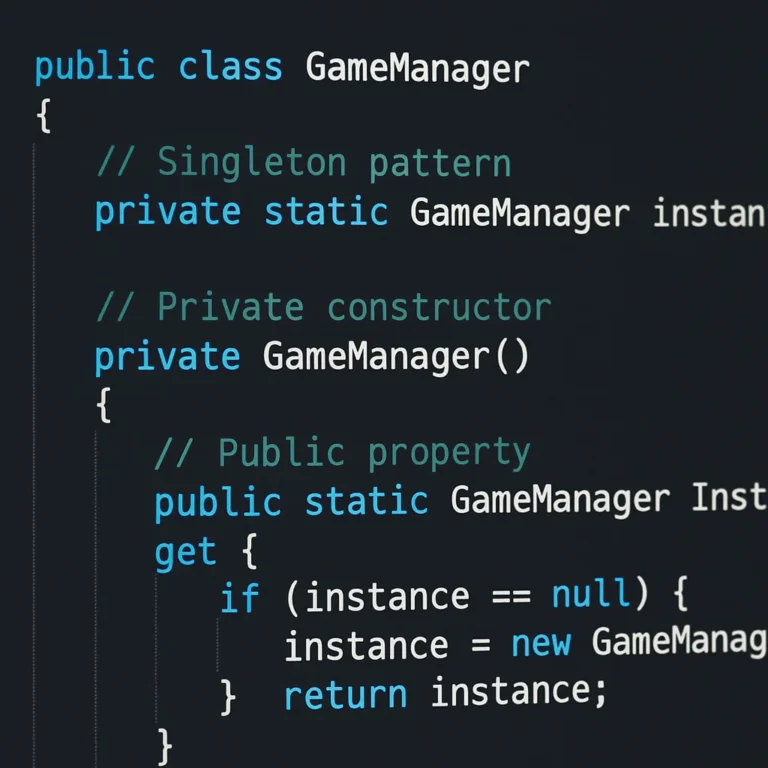
Singletons are useful, but when you use them for everything, you create a Global State that is impossible to test and debug.
- The Symptom: Tests fail because one test modified a global variable that another test relies on.
- The Consequence: Race conditions, hidden dependencies, and “it works on my machine” syndrome.
- The Fix: Use Dependency Injection to pass instances where needed. Limit Singletons to truly global resources (like a config manager).
7. Feature Crep: The Never-Ending Scope Spiral
The client says, “Just add this one small feature.” Then another. Then another. The project scope balloons, and the deadline moves forever.
- The Symptom: The roadmap is 2 years out, and the MVP is still in beta.
- The Consequence: Burnout, budget overuns, and a product that never ships.
- The Fix: Strict scope management. Say “no” or “not now.” Use Agile methodologies to prioritize.
8. Hardcoding: The Rigid Code That Breaks Under Pressure
You put the API key, the server URL, and the game difficulty settings directly in the code.
- The Symptom: You need to recompile the app just to change a color or a server address.
- The Consequence: Security risks (keys in code), inflexibility, and slow deployment cycles.
- The Fix: Use Environment Variables and Configuration Files.
9. The Magic Number: Unexplained Constants in the Wild
What does if (score > 42) mean? Why 42? Why not 41? Why not 43?
- The Symptom: Code filled with unexplained numbers.
- The Consequence: Logic errors when requirements change. Confusion for future maintainers.
- The Fix: Use Named Constants (e.g.,
const WINING_SCORE = 42;).
10. Copy-Paste Programming: The DRY Principle’s Worst Enemy
You copy a block of code, paste it, and change the variable names. Then you do it again. And again.
- The Symptom: The same logic exists in 10 different places.
- The Consequence: When you need to fix a bug, you have to fix it in 10 places. You miss one, and the bug returns.
- The Fix: Refactor into functions. Follow the DRY (Don’t Repeat Yourself) principle.
1. The N+1 Query Problem: Database Death by a Thousand Cuts
You loop through a list of users and query the database for each user’s profile. 10 users = 101 queries.
- The Symptom: The app loads slowly, and the database CPU spikes to 10%.
- The Consequence: Poor performance, high latency, and unhappy users.
- The Fix: Use Eager Loading or batch queries. Optimize your SQL or ORM calls.
12. Over-Engineering: Building a Spaceship to Buy Milk
You need a simple to-do list, so you build a microservices architecture with Kubernetes, Docker, and a message queue.
- The Symptom: The project is complex, expensive, and hard to deploy.
- The Consequence: Wasted resources, slow development, and a system that’s too fragile to maintain.
- The Fix: Start simple. Scale only when you have a proven need.
13. The Silent Failure: Errors That Whisper Instead of Shout
You catch an exception and do nothing. Or you log it to a file that no one reads.
- The Symptom: The app crashes silently. Users report “it just stopped working.”
- The Consequence: Hard-to-debug issues, data loss, and frustrated users.
- The Fix: Log errors properly. Use Monitoring Tools (like Sentry or Datadog) to alert you.
14. Tight Coupling: The Code That Can’t Let Go
Class A depends on Class B. Class B depends on Class C. Change one, and the whole chain breaks.
- The Symptom: You can’t test Class A without mocking Class B and C.
- The Consequence: Rigid code, slow development, and high risk of regression.
- The Fix: Use Interfaces and Dependency Injection to decouple components.
15. The Legacy Code Graveyard: Fear of Refactoring
The code is old, scary, and no one understands it. You’re afraid touch it, so you just add more code on top.
- The Symptom: The codebase grows larger and more complex, but the features don’t improve.
- The Consequence: Technical debt piles up until the project is unmaintainable.
- The Fix: Incremental Refactoring. Write tests first, then slowly improve the code.
🛠️ From Ruin to Ruin: How to Refactor Anti-Patterns into Design Patterns
So, you’ve identified the anti-patterns. Now what? Do you just delete everything and start over? Absolutely not. That’s the “Rewrite Anti-Pattern” itself!
Refactoring is an art. It’s about incremental improvement. Here’s our step-by-step guide to turning your code from a disaster zone into a well-oiled machine.
Step 1: Identify and Document
Before you touch a line of code, document the anti-pattern. What is it? Why is it bad? What is the risk? This helps you prioritize and communicate with your team.
Step 2: Write Tests
Never refactor without tests. If you don’t have tests, write them first. This gives you a safety net. If your refactoring breaks something, the tests will catch it immediately.
Step 3: Small Steps
Don’t try to fix the whole God Object in one day. Break it down. Extract one method. Rename one variable. Move one class. Small, frequent commits are your friends.
Step 4: Use Design Patterns
Once you’ve cleaned up the mess, apply the appropriate Design Pattern.
- God Object → Strategy Pattern or Command Pattern.
- Spaghetti Code → State Pattern or Observer Pattern.
- Tight Coupling → Dependency Injection and Interface Segregation.
Step 5: Review and Iterate
Refactoring is not a one-time thing. It’s a continuous process. Code Reviews are essential. Have your team review the changes to ensure you didn’t introduce new anti-patterns.
“Refactoring is like cleaning your room. You don’t do it once a year; you do it every day.” — Stack Interface™ Lead Developer
🎮 Game Dev Special: Anti-Patterns That Kill Player Engagement
Game development has its own unique set of anti-patterns. You can have the best code in the world, but if the game is boring or broken, players will leave.
The “Juice” Anti-Pattern
You have great mechanics, but the game feels “flat.” No sound effects, no screen shake, no particle effects. This is the lack of “Juice”.
- The Fix: Add Game Feel. Use Screen Shake, Particles, and Sound to make actions feel impactful.
The “Grind” Anti-Pattern
You force players to do repetitive tasks to progress. This is the Grind. It kills engagement.
- The Fix: Balance the difficulty curve. Make progression feel rewarding, not tedious.
The “Pay-to-Win” Anti-Pattern
You make the game too hard unless players pay. This is the Pay-to-Win trap. It destroys trust and community.
- The Fix: Monetize cosmetics, not power. Keep the core game fair for everyone.
The “Tutorial” Anti-Pattern
You force players to watch a 10-minute tutorial before they can play. This is the Tutorial Wall.
- The Fix: Teach by doing. Introduce mechanics gradually as players progress.
The “Bug” Anti-Pattern
You ship the game with critical bugs. This is the Ship It Now anti-pattern.
- The Fix: Test thoroughly. Use Beta Testing and Early Access to catch bugs before launch.
📱 Mobile App Pitfalls: Anti-Patterns That Crash Your User Experience
Mobile apps have specific constraints: limited screen space, battery life, and network connectivity. Ignoring these leads to anti-patterns that ruin the user experience.
The “Battery Drain” Anti-Pattern
Your app runs background processes that drain the battery. This is the Battery Hog.
- The Fix: Optimize Background Tasks. Use Push Notifications instead of polling.
The “Network Dependency” Anti-Pattern
Your app doesn’t work without an internet connection. This is the Always Online trap.
- The Fix: Implement Offline Mode. Cache data locally.
The “Cluttered UI” Anti-Pattern
You cram too many features onto one screen. This is the Cluttered UI.
- The Fix: Simplify the UI. Use Navigation Patterns like Bottom Sheets or Tabs.
The “Slow Load” Anti-Pattern
Your app takes 10 seconds to load. This is the Slow Load anti-pattern.
- The Fix: Optimize Assets. Use Lazy Loading. Compress images.
The “Crash” Anti-Pattern
Your app crashes on certain devices. This is the Fragmentation trap.
- The Fix: Test on multiple devices. Use Crash Reporting tools.
🧪 The Detective’s Toolkit: Identifying and Diagnosing Code Smells
How do you know if you have anti-pattern? You need a Detective’s Toolkit. Here are the tools and techniques we use at Stack Interface™.
Static Analysis Tools
Tools like SonarQube, ESLint, and Pylint scan your code for common anti-patterns. They can detect Code Smells, Security Vulnerabilities, and Performance Issues.
Profiling Tools
Tools like Chrome DevTools, Xcode Instruments, and Android Profiler help you identify Performance Bottlenecks. They show you where your code is slow, where memory is leaking, and where the CPU is spiking.
Code Reviews
Human eyes are still the best tool. Regular code reviews help catch anti-patterns that automated tools miss. They also help spread knowledge and improve team skills.
Unit and Integration Tests
Tests are your safety net. They help you identify Regression Bugs and ensure that your refactoring doesn’t break anything.
Monitoring and Logging
Tools like Sentry, Datadog, and New Relic help you monitor your app in production. They alert you to Errors, Performance Issues, and User Behavior.
🚀 Prevention Strategies: Building Anti-Fragile Architectures
The best way to deal with anti-patterns is to prevent them. Here are some strategies to build Anti-Fragile Architectures that get stronger under stress.
Embrace Simplicity
KISS (Keep It Simple, Stupid). Don’t over-enginer. Start simple and add complexity only when necessary.
Follow Best Practices
Adopt industry Best Practices. Use Design Patterns where appropriate. Follow Coding Standards.
Continuous Integration/Continuous Deployment (CI/CD)
Automate your Build, Test, and Deploy processes. This ensures that every change is tested and validated before it reaches production.
Documentation
Document your code. Write clear comments. Create Architecture Diagrams. This helps new developers understand the codebase and avoid anti-patterns.
Team Culture
Foster a culture of Continuous Learning. Encourage Code Reviews. Celebrate Refactoring. Make it safe to make mistakes and learn from them.
💡 Real-World War Stories: When Anti-Patterns Cost Us Everything
We’ve all been there. Let’s share some war stories from the trenches.
The God Object That Killed a Startup
A startup built their entire app around a single God Object. It was 5,0 lines of code. When they needed to add a new feature, they had touch the whole file. It took weeks. By the time they launched, the market had moved on. The startup failed.
The Spaghetti Code That Broke a Game
A game studio shipped a game with Spaghetti Code. The physics engine was tangled with the UI logic. When they tried to fix a bug, they broke the game. They had to rewrite the entire engine. The game was delayed by a year. The studio went bankrupt.
The Singleton Trap That Crashed a Mobile App
A mobile app used Singletons for everything. When they tried to test the app, the tests failed because of Global State. They couldn’t fix the bugs. The app was full of crashes. Users left. The app was discontinued.
The Premature Optimization That Slowed a Web App
A team spent weeks optimizing a function that ran once a day. Meanwhile, the main loop was slow. The app was still slow. The team wasted time. The users were unhappy.
The Copy-Paste That Caused a Security Breach
A developer copied a block of code that contained a Security Vulnerability. They didn’t understand the code. They pasted it into production. Hackers exploited the vulnerability. The company lost millions.
These stories are not just cautionary tales; they are lessons learned. We can avoid these mistakes by being aware of anti-patterns and taking action to prevent them.
Conclusion

We’ve journeyed through the dark forests of Anti-Patterns, from the God Object to the Silent Failure. We’ve seen how these traps can destroy projects, drain resources, and ruin careers. But we’ve also seen the light at the end of the tunnel: Refactoring, Best Practices, and Continuous Improvement.
The key takeaway? Awareness is power. By recognizing anti-patterns early, you can avoid the pitfalls and build robust, scalable, and maintainable software. Remember, design patterns are tools, not laws. Use them wisely, and always keep the user experience in mind.
So, the next time you’re tempted to copy-paste a block of code, or to optimize a function that doesn’t need it, ask yourself: “Is this anti-pattern?” If the answer is yes, take a step back, breathe, and refactor. Your future self (and your team) will thank you.
And to answer the question we posed at the beginning: Can you avoid anti-patterns? Yes, you can. But it requires vigilance, discipline, and a commitment to continuous learning. The journey is never over, but every step you take brings you closer to clean code and happy users.
🔗 Recommended Links
If you’re ready to take your skills to the next level, here are some resources we recommend:
- Books:
AntiPatterns: Refactoring Software, Architectures, and Projects in Crisis by William J. Brown et al.
Design Patterns: Elements of Reusable Object-Oriented Software by Erich Gamma et al.
Clean Code: A Handbook of Agile Software Craftsmanship by Robert C. Martin - Tools:
SonarQube: SonarQube Official Website
Sentry: Sentry Official Website
Datadog: Datadog Official Website - Courses:
Udemy: Design Patterns in Python
Pluralsight: Refactoring: Improving the Design of Existing Code
❓ FAQ: Your Burning Questions About Anti-Patterns Answered

What are common anti-patterns in game development?
Common anti-patterns in game development include lack of “Juice”, excessive grinding, Pay-to-Win mechanics, por tutorial design, and shipping with critical bugs. These can lead to low player engagement, negative reviews, and poor retention.
Read more about “⚠️ Yes, Design Patterns Can Destroy Your Game (2026 Guide)”
How do anti-patterns affect app performance?
Anti-patterns like N+1 queries, memory leaks, tight coupling, and premature optimization can severely impact app performance. They lead to slow load times, high battery drain, crashes, and poor user experience.
Read more about “🚫 15 App Dev Anti-Patterns to Avoid in 2026”
Can you give examples of design pattern anti-patterns?
Yes. For example, using the Singleton pattern for everything leads to Global State issues. Using the Factory pattern when a simple function suffices is Over-Engineering. Using the Observer pattern without proper cleanup can lead to Memory Leaks.
Read more about “25 Must-Know Design Patterns in C# for 2025 🚀”
What is the difference between a design pattern and anti-pattern?
A Design Pattern is a proven solution to a common problem. An Anti-Pattern is a recurring solution that leads to a bad outcome. Design patterns improve code quality; anti-patterns degrade it.
How to refactor code to avoid anti-patterns in Unity?
In Unity, avoid God Objects by separating logic into MonoBehaviours and ScriptableObjects. Avoid Spaghetti Code by using Coroutines and Events. Avoid Tight Coupling by using Dependency Injection and Interfaces.
Read more about “🧱 15+ Design Patterns for Reusable Apps & Games (2026)”
What are the most frequent anti-patterns in mobile app architecture?
Frequent anti-patterns in mobile apps include hardcoding, lack offline support, battery drain, cluttered UI, and slow load times. These can lead to poor user retention and negative reviews.
Read more about “🏗️ 7 Essential Mobile App Design Patterns for 2026”
Why do developers fall into anti-patterns when implementing design patterns?
Developers often fall into anti-patterns because they misunderstand the pattern, apply it in the wrong context, or over-enginer the solution. They may also lack experience or fail to consider the trade-offs.
How to avoid the “Golden Hammer” anti-pattern?
To avoid the Golden Hammer anti-pattern, evaluate each tool for the specific job. Don’t force a framework where a simple script will do. Consider the trade-offs of each tool.
What is the “Silent Failure” anti-pattern and how to fix it?
The Silent Failure anti-pattern occurs when errors are caught but not logged or handled. To fix it, implement proper error handling, logging, and monitoring. Use tools like Sentry to alert you to issues.
How to prevent “Feature Crep” in a project?
To prevent Feature Crep, establish a clear scope and prioritize features. Use Agile methodologies to manage changes. Say “no” or “not now” to non-essential features.
Read more about “🚀 5 Reasons Design Patterns Save Your Mobile App (2026)”
📚 Reference Links
- AntiPatterns: Refactoring Software, Architectures, and Projects in Crisis – Wiley
- Design Patterns: Elements of Reusable Object-Oriented Software – Addison-Wesley
- Clean Code: A Handbook of Agile Software Craftsmanship – Prentice Hall
- Temporal Anti-Patterns – Developer Corner – Temporal Community
- Stack Overflow: Design Patterns to Avoid – Stack Overflow (Note: Access may be restricted due to security checks)
- Medium: Software Development Anti-Patterns – Medium (Note: Access may be restricted due to security checks)
- SonarQube – SonarQube Official Website
- Sentry – Sentry Official Website
- Datadog – Datadog Official Website
- Udemy: Design Patterns in Python – Udemy
- Pluralsight: Refactoring – Pluralsight