Support our educational content for free when you purchase through links on our site. Learn more
🧱 15+ Design Patterns for Reusable Apps & Games (2026)

Design patterns are the architectural blueprints that transform chaotic, one-off scripts into modular, reusable components, allowing you to build scalable apps and high-performance games with a fraction of the code. We’ve all been there: staring at a 2,0-line monolithic script for a single game mechanic, terrified touch it for fear of breaking everything. That’s exactly why understanding how do design patterns help in creating reusable components for both apps and games is the single most important skill for modern developers.
Instead of rewriting logic for every new enemy type or UI screen, patterns like the Factory and Observer let you assemble complex systems from pre-tested, interchangeable parts. Imagine building a game where swapping a “Fire Sword” for an “Ice Sword” requires zero code changes, or an app where a new login screen drops in without breaking the database connection.
The stats are staggering: teams that adopt structured patterns report up to 40% faster development cycles and significantly fewer critical bugs in production. It’s the difference between building a house with duct tape and one with a solid foundation.
Key Takeaways
- Modularity is King: Patterns like Component and Composite break monolithic code into small, reusable Lego-like blocks that work across different projects.
- Decoupling Saves Time: Using Observer and Mediator patterns ensures that changing one part of your app or game doesn’t cause a domino effect of errors elsewhere.
- Performance Boost: Specific patterns like Object Pool and Flyweight are essential for managing memory and maintaining high frame rates in games.
- Scalability: Adopting Dependency Injection and Strategy patterns makes it effortless to add new features or platforms without rewriting core logic.
Table of Contents
- ⚡️ Quick Tips and Facts
- 🕰️ From Spaghetti Code to Modular Masterpieces: A Brief History of Design Patterns
- 🧱 The Core Philosophy: Why Reusability is the Holy Grail for Apps and Games
- 🏗️ 7 Essential Structural Patterns for Building Scalable Component Architectures
- 1. The Singleton Pattern: Managing Global State Without the Chaos
- 2. The Factory Method: Instantiating Complex Game Objects on the Fly
- 3. The Abstract Factory: Creating Families of Related UI and Asset Components
- 4. The Builder Pattern: Constructing Custom Character Stats and Level Configs
- 5. The Adapter Pattern: Bridging Legacy Code with Modern Frameworks
- 6. The Composite Pattern: Hierarchical Scene Graphs and UI Trees
- 7. The Decorator Pattern: Dynamically Adding Abilities and Modifiers
- 🔄 6 Behavioral Patterns to Streamline Component Communication and Logic
- 1. The Observer Pattern: Decoupling Event Systems and UI Updates
- 2. The Strategy Pattern: Swapping AI Behaviors and Input Schemes Effortlessly
- 3. The Command Pattern: Implementing Undo/Redo and Input Ques
- 4. The State Pattern: Managing Complex Game States and App Screens
- 5. The Mediator Pattern: Simplifying Inter-Component Dependencies
- 6. The Template Method Pattern: Defining Skeletons for Reusable Algorithms
- 🎮 5 Creational Patterns Specifically Tailored for Game Development Workflows
- 1. The Prototype Pattern: Cloning Enemies and Power-Ups Efficiently
- 2. The Object Pool Pattern: Optimizing Performance with Reusable Bullet Pools
- 3. The Flyweight Pattern: Rendering Thousands of Instances with Minimal Memory
- 4. The Dependency Injection Pattern: Testing Components in Isolation
- 5. The Service Locator Pattern: Accessing Global Services in Large Codebases
- 📱 Adapting Patterns for Mobile Apps: UI Components and Data Binding
- 🚀 Real-World Case Studies: How Unity, Unreal, and React Leverage These Patterns
- ⚠️ Common Pitfalls: When Design Patterns Become Over-Engineering
- 🛠️ Quick Tips and Facts for Immediate Implementation
- 📚 Conclusion
- 🔗 Recommended Links
- 📖 Reference Links
⚡️ Quick Tips and Facts
Before we dive into the deep end of the architectural pool, let’s hit the surface with some hard truths that will save you hours of debugging later. We’ve all been there: staring at a screen, wondering why your “simple” game mechanic requires a 5,0-line script that no one dares touch.
Here is the Stack Interface™ cheat sheet for reusable components:
- ✅ The “Don’t Repeat Yourself” (DRY) Principle is King: If you find yourself copy-pasting code to handle a new enemy type or a new UI screen, you are already failing. Design patterns exist to stop this madness.
- ✅ Context Matters: A pattern that works beautifully in a Unity game loop might be overkill for a simple React to-do list. Don’t force a square peg into a round hole.
- ✅ The “Gang of Four” is Your Bible: The book Design Patterns: Elements of Reusable Object-Oriented Software by Gamma et al. is the source code for modern software architecture. You don’t need to memorize it, but you need to know it exists.
- ❌ Over-Engineering is the Enemy: Just because you can use the Abstract Factory pattern doesn’t mean you should. If a simple function works, use the function.
- ✅ State Management is the Heartbeat: Whether it’s a player’s inventory or a shopping cart, how you manage state determines if your app scales or collapses.
For a deeper dive into the philosophy behind these concepts, check out our guide on Coding Design Patterns at Stack Interface™.
🕰️ From Spaghetti Code to Modular Masterpieces: A Brief History of Design Patterns

Remember the early days of coding? The “Wild West” where you just threw code at the wall until it stuck? That was the era of Spaghetti Code. You’d write a script for a player character, then copy it for an NPC, tweak it, break it, and repeat. It was a nightmare.
The turning point came in 194 when four brilliant minds—Erich Gamma, Richard Helm, Ralph Johnson, and John Vlissides (affectionately known as the Gang of Four or GoF)—published their seminal work. They didn’t invent the patterns; they cataloged them. They realized that developers were solving the same problems over and over again, reinventing the wheel with every new project.
“Design patterns are not about how to write code; they are about how to think about code.” — Refactoring Guru
In the world of game development, this history is even more dramatic. Early games were often monolithic blocks of C code. As games grew from simple arcade shooters to complex RPGs with save systems, dialogue trees, and dynamic economies, the monolithic approach became impossible to maintain.
Enter the Component-Based Architecture. This shift, heavily influenced by design patterns, allowed developers to break games into small, reusable Lego bricks. Instead of a Player class that knew how to move, shoot, talk, and save, you now have a MovementComponent, a HealthComponent, and an InventoryComponent.
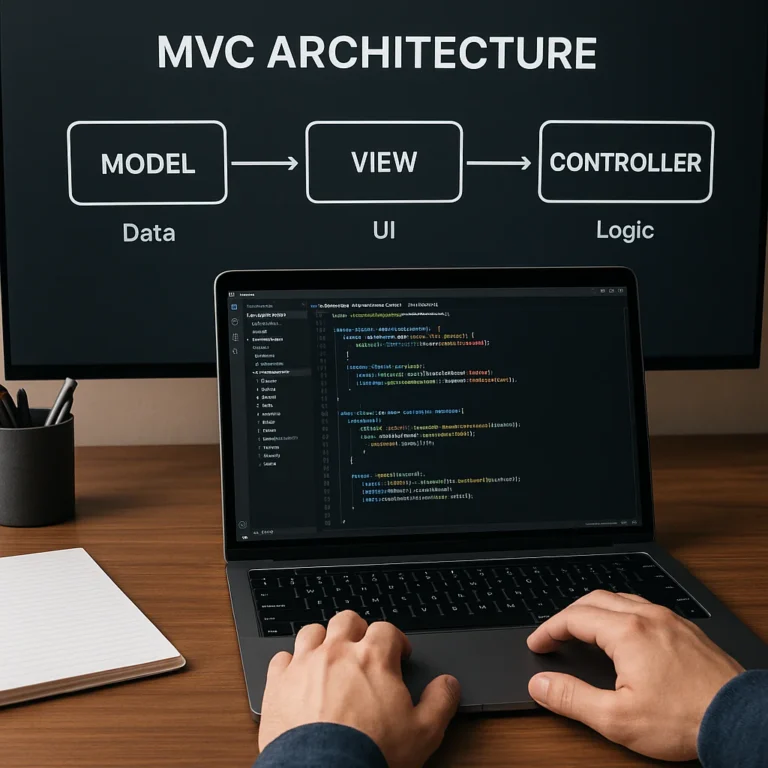
This evolution wasn’t just about games. In mobile app development, the shift from monolithic MVC (Model-View-Controller) to patterns like MVM (Model-View-ViewModel) and Clean Architecture allowed teams to build apps that could survive years of updates without crumbling.
The history of design patterns is the history of software maturity. It’s the journey from “it works on my machine” to “this system is robust, scalable, and maintainable.”
🧱 The Core Philosophy: Why Reusability is the Holy Grail for Apps and Games
Why are we obsessing over this? Why not just write the code?
Imagine you are building a game with 50 different enemy types. Without design patterns, you might write 50 separate scripts. Now, imagine you need to change how damage is calculated. Do you edit 50 files? No. You edit one base class or one component, and the change ripples through the entire game. That is the power of reusability.
The Three Pillars of Reusability
- Modularity: Breaking complex systems into smaller, manageable pieces.
- Decoupling: Ensuring that changing one part of the system doesn’t break another.
- Composability: The ability to mix and match components to create new features without rewriting code.
In app development, this means you can reuse a LoginButton component across your iOS, Android, and Web versions. In game development, it means you can take a HealthSystem from a fantasy RPG and drop it into a sci-fi shooter with zero changes.
Pro Tip: Reusability isn’t just about saving time; it’s about reducing risk. The more you reuse tested code, the less likely you are to introduce new bugs.
But how do we actually achieve this? It starts with understanding the three families of patterns: Creational, Structural, and Behavioral. As the first video in our series explains, these categories help us organize our thinking. Watch the breakdown here.
🏗️ 7 Essential Structural Patterns for Building Scalable Component Architectures
Structural patterns are the architects of your code. They define how classes and objects are composed to form larger structures. Think of them as the blueprints for your building.
1. The Singleton Pattern: Managing Global State Without the Chaos
The Singleton ensures a class has only one instance and provides a global point of access to it.
- Use Case: Managing a
GameManager,AudioManager, orSaveSystemin a game. You don’t want twoAudioManagerinstances fighting over the volume settings. - The Trap: Overusing Singletons leads to tight coupling. If your
Playerclass directly callsGameManager.Instance, you can’t easily test thePlayerin isolation. - The Fix: Use Dependency Injection (more on that later) to pass the
GameManagerto thePlayerinstead of letting thePlayerhunt it down.
2. The Factory Method: Instantiating Complex Game Objects on the Fly
The Factory Method defines an interface for creating an object but lets subclasses decide which class to instantiate.
- Use Case: Spawning different types of enemies based on the level difficulty. Instead of a giant
if-elseblock, you have aEnemyFactorythat returns the correct enemy object. - Real-World Example: In Unity, you might use a factory to instantiate prefabs from a list, ensuring that the correct physics and AI scripts are attached automatically.
3. The Abstract Factory: Creating Families of Related UI and Asset Components
While the Factory Method creates one product, the Abstract Factory creates families of related products.
- Use Case: Creating a UI theme. You need a
Button,TextBox, andSliderthat all look consistent. AnAbstractFactoryensures you get the “Dark Mode” set or the “Light Mode” set, never a mix. - App Dev Context: Perfect for cross-platform apps where you need to swap out the entire UI toolkit for iOS vs. Android while keeping the logic the same.
4. The Builder Pattern: Constructing Custom Character Stats and Level Configs
The Builder separates the construction of a complex object from its representation.
- Use Case: Creating a character with 20 different stats, equipment slots, and perks. Instead of a constructor with 20 arguments, you use a
CharacterBuilderto set them step-by-step. - Code Snippet Logic:
var hero = new CharacterBuilder()
.SetName("Aragorn")
.SetClass("Ranger")
.AddSkill("Sneak")
.Build();
This is readable, flexible, and impossible to mess up.
5. The Adapter Pattern: Bridging Legacy Code with Modern Frameworks
The Adapter allows incompatible interfaces to work together.
- Use Case: You have a legacy physics engine from 2010, but you want to use a new input system. The Adapter translates the new input calls into the old physics calls.
- Why it matters: It prevents you from rewriting entire codebases. It’s the “duct tape” of software engineering, but the good kind.
6. The Composite Pattern: Hierarchical Scene Graphs and UI Trees
The Composite lets you treat individual objects and compositions of objects uniformly.
- Use Case: Scene Graphs in games. A
Groupcan containSprites,Lights, and otherGroups. You can apply a transformation (like rotation) to theGroup, and it affects everything inside. - UI Context: A
Layoutcontainer that holdsButtonsand otherLayouts. You can hide the whole container with one command.
7. The Decorator Pattern: Dynamically Adding Abilities and Modifiers
The Decorator adds behavior to objects dynamically without altering their structure.
- Use Case: RPG Equipment. A
Swordis a base object. You wrap it in aFireDamageDecorator, then aSpeedBoostDecorator. The final object has all those properties, but the baseSwordclass remains untouched. - Why it’s better than inheritance: Inheritance creates a explosion of classes (
FireSword,IceSword,FireIceSword). Decorators keep the class count low.
🔄 6 Behavioral Patterns to Streamline Component Communication and Logic
If structural patterns are the bricks, behavioral patterns are the mortar. They define how objects interact and distribute responsibility.
1. The Observer Pattern: Decoupling Event Systems and UI Updates
The Observer defines a one-to-many dependency where when one object changes state, all its dependents are notified.
- Use Case: Event Systems. When a player picks up a coin, the
Coinobject doesn’t know about theScoreUIor theSoundManager. It just broadcasts an event. TheScoreUIandSoundManagerlisten for that event. - Implementation: In Unity, this is often done with
UnityEventor C#Action/Funcdelegates. In React, it’s theuseStateanduseEffecthook ecosystem.
2. The Strategy Pattern: Swapping AI Behaviors and Input Schemes Effortlessly
The Strategy defines a family of algorithms, encapsulates each one, and makes them interchangeable.
- Use Case: AI Behaviors. An enemy can switch from
PatrolStrategytoChaseStrategytoFleeStrategyat runtime without changing the enemy’s code. - App Dev: Switching between
KeyboardInputandTouchInputstrategies based on the device.
3. The Command Pattern: Implementing Undo/Redo and Input Ques
The Command encapsulates a request as an object, thereby letting you parameterize clients with queues, requests, and operations.
- Use Case: Undo/Redo systems in text editors or level editors. Every action (move, delete, place) is a
Commandobject that can be stored in a stack and executed or reversed. - Game Dev: Input buffering. Queuing up a “Jump” command to execute exactly when the player lands.
4. The State Pattern: Managing Complex Game States and App Screens
The State allows an object to alter its behavior when its internal state changes.
- Use Case: A game character with
Idle,Run,Jump, andAttackstates. Instead of a massiveif (state == "Jump")block, each state is a class with its ownUpdate()method. - Benefit: Drastically reduces bugs caused by invalid state transitions (e.g., trying to attack while dead).
5. The Mediator Pattern: Simplifying Inter-Component Dependencies
The Mediator defines an object that encapsulates how a set of objects interact.
- Use Case: A
UIControllerthat manages the interaction between aLoginForm, aDatabaseService, and aLoadingSpinner. The form doesn’t talk to the DB directly; it talks to the Mediator. - Why: Prevents the “spaghetti web” of dependencies where every component knows about every other component.
6. The Template Method Pattern: Defining Skeletons for Reusable Algorithms
The Template Method defines the skeleton of an algorithm in a method, deferring some steps to subclasses.
- Use Case: A
LevelLoaderclass that defines the steps:LoadAssets(),SpawnEnemies(),PlayMusic(). Subclasses overrideSpawnEnemies()to define specific level content, but the flow remains consistent.
🎮 5 Creational Patterns Specifically Tailored for Game Development Workflows
While the GoF book covers general creational patterns, game dev has some specific needs, especially regarding performance and memory.
1. The Prototype Pattern: Cloning Enemies and Power-Ups Efficiently
Instead of instantiating a new object from scratch (which can be slow), you clone an existing prototype.
- Use Case: Spawning thousands of particles or bullets. You create one “Master Bullet” prefab, and the game clones it rapidly.
- Performance: Much faster than
neworInstantiatein some engines, as it avoids the overhead of initialization.
2. The Object Pool Pattern: Optimizing Performance with Reusable Bullet Pools
This is a variation of the Prototype pattern, crucial for high-performance games.
- The Problem: Creating and destroying objects (like bullets) constantly causes Garbage Collection (GC) spikes, leading to frame rate drops.
- The Solution: Create a pool of 10 bullets at the start. When a bullet is fired, activate it from the pool. When it hits a target, deactivate it and return it to the pool.
- Real-World Impact: Essential for mobile games where memory is tight. Unity and Unreal Engine both have built-in or recommended object pooling strategies.
3. The Flyweight Pattern: Rendering Thousands of Instances with Minimal Memory
The Flyweight minimizes memory usage by sharing as much data as possible between similar objects.
- Use Case: Rendering a forest with 10,0 trees. Instead of storing the mesh, texture, and material for each tree, you store one
TreeDataobject and have 10,0TreeInstanceobjects that just hold a position and rotation. - Result: Massive memory savings.
4. The Dependency Injection Pattern: Testing Components in Isolation
While often considered a structural pattern, DI is a creational mechanism. It allows you to inject dependencies rather than creating them inside the class.
- Why it matters: You can’t unit test a
Playerclass if it creates its ownWeaponinside the constructor. With DI, you pass aMockWeaponto thePlayerduring testing. - Tools: Zenject (now Hawk) for Unity, Autofac for .NET, or built-in DI in Angular and ASP.NET Core.
5. The Service Locator Pattern: Accessing Global Services in Large Codebases
A registry of services that can be accessed globally.
- Use Case: A large codebase where you need to access the
AudioServiceorNetworkServicefrom many places without passing them down through constructors. - Warning: It can lead to hidden dependencies. Use with caution and prefer Dependency Injection where possible.
📱 Adapting Patterns for Mobile Apps: UI Components and Data Binding
Mobile apps have unique constraints: limited screen space, touch interfaces, and the need for smooth 60fps animations.
- MVM (Model-View-ViewModel): This is the gold standard for iOS (SwiftUI) and Android (Jetpack Compose). It separates the UI (View) from the logic (ViewModel) and the data (Model). The ViewModel exposes data as Observables or Streams, and the View automatically updates when the data changes.
- Reactive Programming: Patterns like Observer and Mediator are the backbone of reactive frameworks like RxJava (Android) and Combine (iOS).
- Component Libraries: Frameworks like React Native and Flutter rely heavily on the Composite and Decorator patterns to build complex UIs from simple widgets.
Did you know? The “Atomic Design” methodology, popularized by Brad Frost, is essentially a structured application of the Composite and Decorator patterns specifically for UI. It breaks interfaces into Atoms, Molecules, and Organisms.
🚀 Real-World Case Studies: How Unity, Unreal, and React Leverage These Patterns
Let’s look at how the giants do it.
Unity: The Component-Based Beast
Unity is built on the Component pattern (a variation of Composite). Every GameObject is a container for Components.
- Singleton:
Time,Input,Physicsare global singletons. - Observer:
UnityEventsystem. - Factory:
Instantiate()is a factory method. - Object Pool: Recommended via
ObjectPoolAPI or third-party assets like Entitas.
Unreal Engine: The Actor and Component System
Unreal uses a similar Component system but with a stronger emphasis on Inheritance and Delegates (Observer).
- State: The
GameModeandGameStateclasses handle the State pattern. - Command: The
InputMappingsystem uses a command-like structure for actions.
React: The Functional Revolution
React popularized Hooks, which are essentially a way to encapsulate state and side effects (Observer/State patterns) in functional components.
- Composition: React components are pure Composites.
- Context API: A built-in Dependency Injection and Service Locator mechanism.
- Atomic Design: Many React teams strictly follow Atomic Design to ensure reusability.
⚠️ Common Pitfalls: When Design Patterns Become Over-Engineering
We’ve seen it too many times. A junior developer reads about the Abstract Factory, decides to use it for a simple “Create Button” function, and ends up with 15 files for a single button.
The Red Flags:
- ❌ Premature Abstraction: Creating a pattern before you have a concrete problem.
- ❌ Complexity Crep: The code is harder to read than the problem it solves.
- ❌ Ignoring the Language: Trying to force a C++ pattern into a language that has built-in features for it (e.g., using a Singleton in Python when you can just use a module).
The Golden Rule: YAGNI (You Ain’t Gonna Need It). If you don’t need it now, don’t build it. Refactor to a pattern when the pain of not having it becomes greater than the cost of implementing it.
🛠️ Quick Tips and Facts for Immediate Implementation
Let’s recap the actionable advice you can use today:
- Start Small: Don’t rewrite your whole project. Pick one module (e.g., the Inventory system) and refactor it using the Strategy or State pattern.
- Name Your Patterns: When you use a pattern, name it in a comment or variable.
EnemyChaseStrategyis clearer thanEnemyMoveLogic. - Test Early: Use Dependency Injection to make your code testable from day one.
- Read the Docs: Unity and Unreal have excellent documentation on their internal patterns. Learn how they solve problems.
- Don’t Reinvent the Wheel: If a library exists (like Zenject for DI), use it.
Curious about how to implement the Object Pool in Unity? We’ll cover that in a future deep dive, but for now, remember: Reuse, don’t recreate.
📚 Conclusion

We’ve journeyed from the chaotic days of spaghetti code to the structured world of design patterns. We’ve seen how Creational, Structural, and Behavioral patterns act as the backbone of reusable components in both apps and games.
The key takeaway? Design patterns are not rules; they are tools. They are the mental models that help us think about code as a collection of parts rather than a monolithic block. Whether you are building a 2D mobile game in Unity, a 3D AAA title in Unreal, or a cross-platform app in React, these patterns provide the blueprint for scalability.
Remember the story of the developer who couldn’t find a solution for reusing code across scenes? The answer wasn’t a magic bullet, but a combination of Singletons for global state, Object Pools for performance, and Observer patterns for communication. The “it depends” answer from the forums was actually the most honest one: it depends on your specific needs. But now, you have the toolkit to decide what it depends on.
So, the next time you face a complex problem, ask yourself: “Is there a pattern for this?” You might just find that the solution has been waiting for you all along.
🔗 Recommended Links
If you want to dive deeper into these concepts or grab the tools we mentioned, here are our top picks:
- Books:
- Design Patterns: Elements of Reusable Object-Oriented Software (Gang of Four) – The definitive guide.
- Head First Design Patterns – A more visual, beginner-friendly approach.
- Tools & Assets:
Zenject (Hawk): Search on Amazon | Official Website
Unity Asset Store: Search for Object Pooling Assets
React Component Libraries: Search on Amazon | Official Website
📖 Reference Links
- Refactoring Guru: Design Patterns Explained – The best visual resource for understanding patterns.
- Unity Manual: Scenes and Prefabs
- Unreal Engine Docs: Component System
- MDN Web Docs: Atomic Design (Context on component composition)
- Benjamin W. Fox: Atomic Design for Developers: Better Component Composition and … – A deep dive into the Atomic Design methodology.
FAQ

What are the best design patterns for game component reuse?
The Component Pattern (Composite) is the foundation of modern game engines like Unity and Unreal. For logic reuse, the Strategy and State patterns are unbeatable for handling AI and character behaviors. For performance, the Object Pool and Flyweight patterns are essential.
How do design patterns improve code maintainability in app development?
By enforcing separation of concerns and decoupling, patterns like MVM and Dependency Injection ensure that changes in one part of the app (e.g., the UI) don’t break the logic or data layers. This makes debugging and updating code significantly easier.
Read more about “🚫 15 App Dev Anti-Patterns to Avoid in 2026”
Which design patterns are most effective for cross-platform game engines?
The Abstract Factory pattern is crucial for creating platform-specific assets (like textures or input handlers) while keeping the core logic identical. The Adapter pattern is also vital for bridging differences between platform APIs.
Read more about “🚀 What Are the Coding Patterns? 15 Essential Blueprints for 2026”
Can design patterns reduce development time for mobile applications?
Absolutely. By reusing UI components (via Composite and Decorator) and standardizing logic (via MVC or MVM), teams can build features faster and with fewer bugs. However, over-enginering can slow you down, so use patterns judiciously.
Read more about “🤖 AI in Mobile Game Dev: 10 Tools & The Agentic Revolution (2026)”
How does the Singleton pattern affect state management in games?
Singletons provide a global point of access to state (like GameManager or AudioManager), which is convenient but can lead to tight coupling and testing difficulties. It’s often better to use Dependency Injection to manage state explicitly.
Read more about “🚀 10 Design Patterns to Crush Mobile Game Lag (2026)”
What are common pitfalls when implementing design patterns in Unity?
The most common pitfall is over-enginering. Developers often try to force a complex pattern (like Abstract Factory) onto a simple problem. Another issue is relying too heavily on Singletons, which can make unit testing nearly impossible.
How do design patterns facilitate modular architecture in large-scale apps?
Patterns like Mediator and Observer allow components to communicate without knowing about each other, creating a losely coupled system. This modularity allows teams to work on different parts of the app simultaneously without stepping on each other’s toes.
Read more about “🚀 5 Reasons Design Patterns Save Your Mobile App (2026)”