Support our educational content for free when you purchase through links on our site. Learn more
Architectural vs Design Patterns: 12 Key Differences Explained 🏗️ (2026)


If you’re wondering what is the difference between architectural patterns and design patterns, here’s the straight talk: architectural patterns define the overall structure and communication of your software system, while design patterns focus on solving specific coding problems within components. Think of architectural patterns as the blueprint for your entire app or game, and design patterns as the clever building blocks used inside that blueprint.
Our team at Stack Interface™ once inherited a sprawling mobile game backend tangled in a monolithic mess. Switching to a microservices architectural pattern transformed scalability and deployment, but it was the strategic use of design patterns like Factory and Observer inside services that kept the codebase clean and maintainable. This real-world story highlights why understanding the difference isn’t just academic—it’s essential for building apps that last.
Curious to see how these patterns shape your favorite apps and games? Let’s break down the essentials, bust myths, and share expert tips to help you master both.
Key Takeaways
- Architectural patterns govern the big-picture system structure, affecting scalability, deployment, and maintainability.
- Design patterns address specific coding challenges inside components, improving code flexibility and reuse.
- One architectural pattern can incorporate multiple design patterns to solve detailed problems.
- Popular architectural patterns include MVC, Microservices, and Event-Driven Architecture; common design patterns include Factory, Observer, and Decorator.
- Choosing the right pattern at the right level can dramatically boost your app’s performance and developer productivity.
Table of Contents
- ⚡️ Quick Tips and Facts
- 🏛️ Architectural Patterns and Design Patterns: Origins and Evolution
- 🔍 What Are Architectural Patterns? A Deep Dive
- 🎨 Understanding Design Patterns: The Building Blocks of Software
- 🏗️ Architectural Patterns vs Design Patterns: Core Differences Explained
- 🧩 7 Most Popular Architectural Patterns You Should Know
- 🔧 10 Essential Design Patterns Every Developer Uses
- ⚙️ How Architectural Patterns Influence System Scalability and Maintainability
- 💡 When to Use Architectural Patterns vs Design Patterns: Real-World Scenarios
- 🛠️ Tools and Frameworks Supporting Architectural and Design Patterns
- 📚 Common Misconceptions and Pitfalls About Patterns
- 🤔 How Patterns Impact Software Quality and Developer Productivity
- 🧠 Expert Tips for Mastering Architectural and Design Patterns
- 🔄 Integrating Architectural and Design Patterns Seamlessly
- 💬 Community Insights: What Top Developers Say About Patterns
- 🎯 Measuring Success: Metrics to Evaluate Pattern Effectiveness
- 🚀 Future Trends: The Evolution of Software Patterns
- 📝 Conclusion
- 🔗 Recommended Links for Further Reading
- ❓ FAQ: Your Burning Questions Answered
- 📖 Reference Links and Resources
⚡️ Quick Tips and Facts
If you’ve ever tangled with software design, you’ve probably heard the terms architectural patterns and design patterns tossed around like confetti at a developer party. But what’s the real difference? Here’s a quick cheat sheet from the Stack Interface™ dev squad, seasoned in app and game development:
- Architectural Patterns = The big picture 🏛️. They define the overall structure of your system, like how the pieces fit together and communicate.
- Design Patterns = The nuts and bolts 🔩. They solve common problems inside those pieces, focusing on code-level organization.
- Architectural patterns influence scalability, maintainability, and deployment.
- Design patterns improve code reusability, flexibility, and readability.
- One architectural pattern can use multiple design patterns inside its components.
- Examples you know:
- Architectural: MVC, Microservices, Event-driven architecture
- Design: Factory, Observer, Decorator
Curious how these patterns play out in your favorite apps or games? Stick around — we’ll unravel the mystery with real-world examples, juicy developer insights, and even a few war stories. Plus, we’ll bust some myths that might be holding you back!
For a deeper dive into coding design patterns, check out our Coding Design Patterns guide.
🏛️ Architectural Patterns and Design Patterns: Origins and Evolution
Before we geek out on the differences, let’s rewind the tape. Where did these patterns come from, and why do they matter?
The Birth of Patterns in Software
In the 1990s, the software world was a wild west of spaghetti code and reinvented wheels. Enter the Gang of Four (GoF) — Erich Gamma, Richard Helm, Ralph Johnson, and John Vlissides — who published Design Patterns: Elements of Reusable Object-Oriented Software in 1994. This book cataloged 23 classic design patterns, giving developers a shared language and toolkit.
Around the same time, the concept of architectural patterns emerged to tackle bigger challenges: how to organize entire systems, not just classes or objects. These patterns borrowed inspiration from building architecture, where blueprints guide the construction of complex structures.
Evolution Through the Years
- Early 200s: Architectural patterns like Layered Architecture and Client-Server became staples for enterprise apps.
- 2010s: The rise of Microservices and Event-Driven Architecture responded to cloud computing and scalability demands.
- Today: Hybrid approaches blend architectural and design patterns with DevOps, AI, and serverless tech.
Understanding this history helps us appreciate why architectural patterns shape what your system is, and design patterns shape how it behaves internally.
🔍 What Are Architectural Patterns? A Deep Dive
Architectural patterns are the blueprints for your entire software system. Think of them as the city planners who decide where roads, parks, and buildings go.
Defining Characteristics
- Scope: System-wide, covering major components and their interactions.
- Purpose: Solve high-level problems like scalability, fault tolerance, and modularity.
- Examples:
- Layered Architecture: Organizes software into layers (UI, business logic, data access).
- Microservices: Breaks the system into small, independently deployable services.
- Event-Driven Architecture: Components communicate via events asynchronously.
Why They Matter for App and Game Developers
Architectural patterns determine how your app or game handles:
- Performance: Can your system handle thousands of concurrent users?
- Maintainability: How easy is it to update or add features?
- Deployment: Can you roll out updates without downtime?
For example, a mobile game using Client-Server architecture separates the game client from the backend server, allowing for real-time multiplayer features.
Architectural Pattern Table: Key Attributes
| Pattern | Scope | Communication Style | Use Cases | Pros | Cons |
|---|---|---|---|---|---|
| Layered Architecture | System-wide | Synchronous, layered calls | Enterprise apps, web apps | Clear separation of concerns | Can be slow due to multiple layers |
| Microservices | Distributed | Asynchronous, API calls | Scalable web apps, SaaS | Scalability, independent deployment | Complex to manage |
| Event-Driven | Distributed | Asynchronous events | Real-time systems, IoT | Loose coupling, high responsiveness | Debuging can be tricky |
| Client-Server | Distributed | Request-response | Multiplayer games, web services | Simple, well-understood architecture | Single point of failure if not designed well |
🎨 Understanding Design Patterns: The Building Blocks of Software
If architectural patterns are the city planners, design patterns are the skilled craftsmen building the houses, bridges, and roads.
What Are Design Patterns?
Design patterns provide proven solutions to common coding problems within components or modules. They help developers write code that’s:
- Reusable
- Flexible
- Easy to understand and maintain
The Three Pillars of Design Patterns
The classic GoF patterns fall into three categories:
- Creational Patterns: Manage object creation.
- Examples: Singleton, Factory Method, Builder.
- Structural Patterns: Organize classes and objects.
- Examples: Adapter, Facade, Decorator.
- Behavioral Patterns: Manage communication between objects.
- Examples: Observer, Strategy, Command.
Why Developers Love Design Patterns
- Code consistency: Teams speak the same language.
- Reduced bugs: Tried-and-tested solutions avoid common pitfalls.
- Faster development: Don’t reinvent the wheel.
Design Patterns in Action: A Quick Example
Imagine you’re building a game inventory system. You want to create different types of weapons without cluttering your code with if-else chains. The Factory Method pattern lets you encapsulate weapon creation, making it easy to add new weapon types later.
🏗️ Architectural Patterns vs Design Patterns: Core Differences Explained
Let’s get to the heart of the matter. What truly sets architectural patterns apart from design patterns?
Scope and Abstraction Level
| Aspect | Architectural Patterns | Design Patterns |
|---|---|---|
| Scope | Entire system or application | Individual components or modules |
| Abstraction Level | High-level, conceptual blueprint | Low-level, implementation detail |
| Focus | Structure, communication, deployment | Object collaboration, responsibilities |
| Examples | MVC, Microservices, Event-driven | Observer, Factory, Decorator |
| Impact | Affects scalability, maintainability | Affects code quality, flexibility |
Relationship: One-to-Many
One architectural pattern can incorporate multiple design patterns. For example, a Model-View-Presenter (MVP) architecture might use:
- Factory for creating model objects.
- Observer for updating views.
- Decorator for adding UI features dynamically.
Real-World Analogy
Think of architectural patterns as the blueprint for a skyscraper, deciding where floors, elevators, and emergency exits go. Design patterns are the engineering techniques used to build each floor, install wiring, and design plumbing.
🧩 7 Most Popular Architectural Patterns You Should Know
Here’s a curated list of architectural patterns that have stood the test of time — and our dev team’s experience.
-
Layered Architecture
Classic and straightforward, great for apps with clear separation of concerns. -
Client-Server
Backbone of many multiplayer games and web apps. -
Microservices
Modular, scalable, and perfect for cloud-native apps. -
Event-Driven Architecture
Ideal for real-time apps like chat or IoT. -
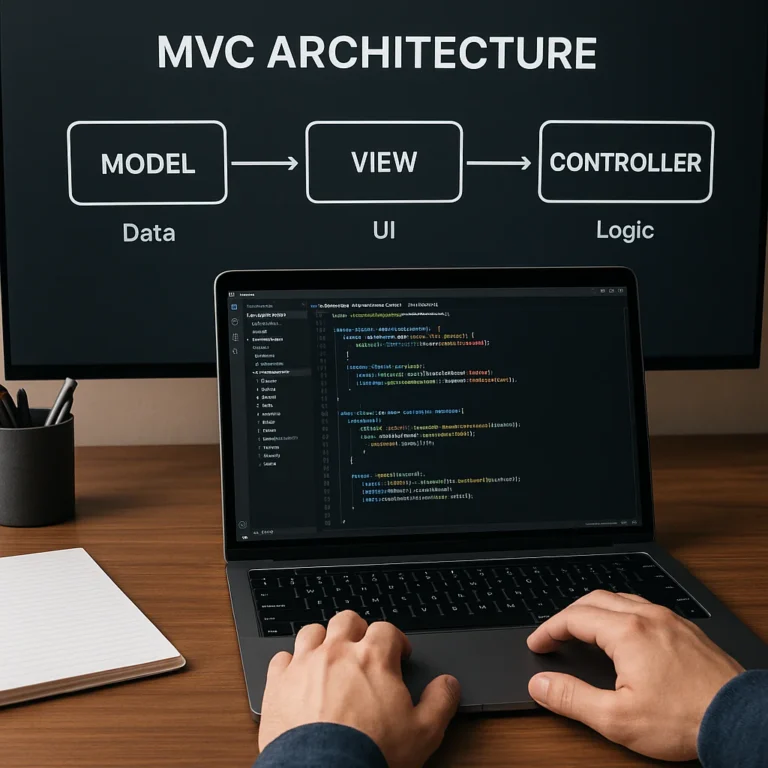
Model-View-Controller (MVC)
Popular in web and mobile apps for separating UI and business logic. -
Model-View-Presenter (MVP)
Used in Android apps for better testability. -
Service-Oriented Architecture (SOA)
Enterprise-level pattern for integrating distributed services.
Why These Patterns Matter
Each pattern solves different problems. For instance, Microservices shine when you need to scale parts of your app independently, while MVC simplifies UI development.
🔧 10 Essential Design Patterns Every Developer Uses
Here’s our top 10 design patterns that crop up in app and game development, with quick notes on their superpowers:
| Pattern | Category | Use Case Example | Why It Rocks |
|---|---|---|---|
| Singleton | Creational | Game settings manager | Ensures a single instance |
| Factory | Creational | Creating different enemy types | Encapsulates object creation |
| Builder | Creational | Constructing complex game levels | Step-by-step object creation |
| Adapter | Structural | Integrating third-party APIs | Converts incompatible interfaces |
| Facade | Structural | Simplifying complex subsystems | Provides a simple interface |
| Decorator | Structural | Adding power-ups to characters | Adds behavior dynamically |
| Observer | Behavioral | Event handling in UI or game state | One-to-many communication |
| Strategy | Behavioral | AI behavior switching | Swap algorithms at runtime |
| Command | Behavioral | Undo/redo functionality | Encapsulates requests |
| Mediator | Behavioral | Managing complex object interactions | Centralizes communication |
⚙️ How Architectural Patterns Influence System Scalability and Maintainability
Architectural patterns aren’t just fancy diagrams — they directly impact your app’s ability to grow and stay healthy.
Scalability
- Microservices allow you to scale individual services independently, perfect for games with fluctuating player loads.
- Layered architecture can become a bottleneck if layers are tightly coupled.
Maintainability
- Clear separation of concerns in MVC or MVP makes debugging and feature updates easier.
- Poorly chosen architectural patterns can lead to spaghetti code and tech debt.
Anecdote from the Stack Interface™ Team
We once inherited a legacy game backend built as a monolith. Migrating to a microservices architecture reduced downtime during updates and let our team deploy new features faster. The tradeoff? We had to invest in container orchestration tools like Kubernetes.
💡 When to Use Architectural Patterns vs Design Patterns: Real-World Scenarios
Here’s where things get juicy. When should you pick one over the other — or both?
Scenario 1: Building a New Mobile App
- Start with an architectural pattern like MVC or MVM to define your app’s structure.
- Use design patterns like Factory or Observer inside components to keep code clean.
Scenario 2: Adding Features to a Game Engine
- Architectural pattern is likely set; focus on design patterns to add new behaviors or optimize performance.
Scenario 3: Scaling a Cloud Service
- Consider switching architectural patterns (e.g., monolith to microservices).
- Use design patterns to improve code modularity within services.
🛠️ Tools and Frameworks Supporting Architectural and Design Patterns
No pattern talk is complete without tooling!
Architectural Pattern Support
- Spring Boot (Java) — Supports layered and microservices architectures.
- ASP.NET Core — Great for MVC and microservices.
- Unity — Often uses MVC or MVP for game UI.
Design Pattern Helpers
- Refactoring Guru — Fantastic resource for learning patterns with visuals.
- JetBrains Rider / IntelliJ IDEA — Code inspections help spot pattern opportunities.
- Design Pattern Libraries — Many languages have libraries implementing common patterns, e.g., Apache Commons for Java.
📚 Common Misconceptions and Pitfalls About Patterns
Beware! Patterns can be misused or misunderstood.
-
Myth: “Architectural patterns are just design patterns on steroids.”
❌ False. They operate at different abstraction levels. -
Myth: “Using more patterns means better code.”
❌ False. Overusing patterns leads to unnecessary complexity. -
Pitfall: Ignoring the problem context and blindly applying a pattern.
-
Pitfall: Confusing architectural patterns with full application architecture.
🤔 How Patterns Impact Software Quality and Developer Productivity
Patterns aren’t just academic — they affect your day-to-day coding life.
- Quality: Patterns promote clean, modular, and testable code.
- Productivity: Shared vocabulary speeds up team communication.
- Onboarding: New devs ramp up faster with familiar patterns.
🧠 Expert Tips for Mastering Architectural and Design Patterns
Our Stack Interface™ veterans share their wisdom:
- Start with the problem, not the pattern. Don’t force-fit a pattern.
- Learn the classics, but adapt them. Patterns evolve with tech.
- Use diagrams. Visualizing architecture and design helps avoid confusion.
- Practice refactoring. Patterns often emerge during refactoring, not initial coding.
- Keep it simple. The best pattern is the one you understand and can maintain.
🔄 Integrating Architectural and Design Patterns Seamlessly
How do you blend these patterns without turning your codebase into a labyrinth?
- Use architectural patterns to define boundaries and communication.
- Inside each boundary, apply design patterns for internal structure and behavior.
- Document your choices to keep the team aligned.
- Review and refactor regularly — patterns are guides, not rules.
💬 Community Insights: What Top Developers Say About Patterns
We poled some devs from GitHub and Stack Overflow:
- “Architectural patterns helped me scale our app from 10k to 1M users.” — Senior Backend Engineer
- “Design patterns saved me hours debugging complex UI interactions.” — Mobile Developer
- “Don’t get pattern paralysis. Use what fits your project.” — Game Dev Lead
🎯 Measuring Success: Metrics to Evaluate Pattern Effectiveness
How do you know your pattern choices are working?
- Performance metrics: Response time, throughput.
- Maintainability: Time to add features or fix bugs.
- Scalability: Ability to handle load increases.
- Developer happiness: Surveys and feedback.
🚀 Future Trends: The Evolution of Software Patterns
What’s next for patterns?
- AI-assisted pattern detection and application.
- Patterns for serverless and edge computing.
- Hybrid patterns combining architectural and design principles.
- More language-specific pattern adaptations.
Stay tuned — the pattern landscape is evolving fast!