Support our educational content for free when you purchase through links on our site. Learn more
Are Design Patterns Hurting Your App? ⚠️

Yes, there are drawbacks to using coding design patterns in app and game development. They can add boilerplate, hide control flow, slow protyping, increase maintenance work, and even hurt runtime performance when abstractions sit on hot paths.
That does not make design patterns bad. It means they should solve a demonstrated problem rather than decorate an architecture diagram. A Strategy can make interchangeable algorithms clean; the same Strategy can be needless ceremony around a function that never changes.
At Stack Interface™, we once reviewed a tiny gameplay feature wrapped in a factory, resolver, provider, command, and strategy chain. The feature was a string conversion. Replacing the maze with one readable function made debugging dramatically easier, proving a slightly painful point: flexibility is useful only when the project actually needs it.
For games, the risks become sharper because frame time, memory allocation, garbage collection, and input latency matter. For apps, the main costs are often onboarding difficulty, excessive layers, dependency confusion, and architecture that slows ordinary feature work.
Key Takeaways
- Design patterns are tools, not rules. Use them when they reduce duplication, isolate change, improve testing, or solve measured performance problems.
- Overengineering is the biggest drawback. Factories, event buses, repositories, and dependency layers can make simple features harder to understand.
- Game development has special performance risks. Per-frame allocations, indirect calls, event dispatch, and poor data locality can contribute to stuttering.
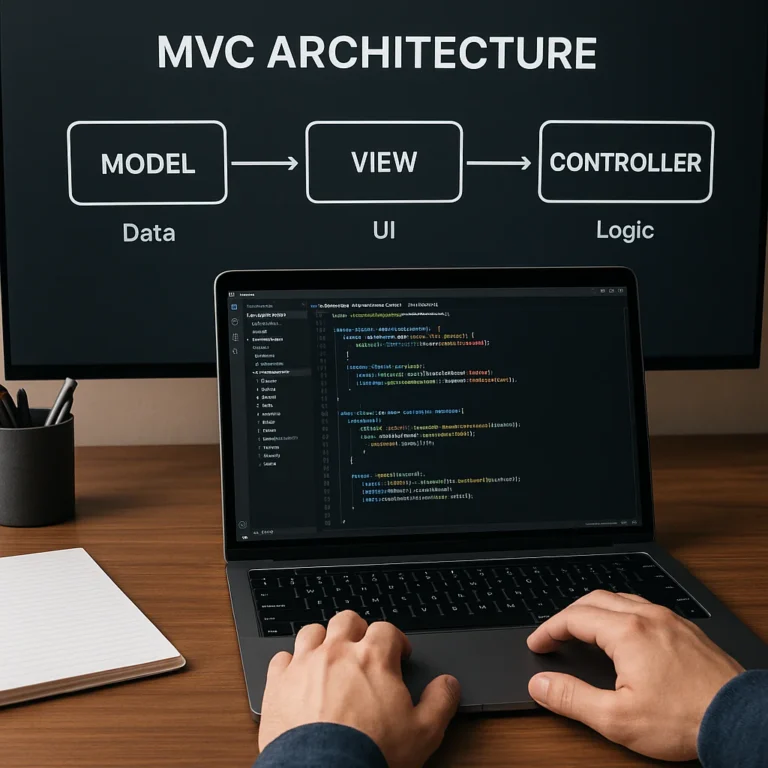
- App architecture can become unnecessarily layered. MVC, Clean Architecture, reactive state, and dependency injection should fit the project’s scope and framework.
- ECS is not automatically better. It can suit large, data-oriented workloads, but object composition may be clearer for behavior-rich domains.
- Start simple and refactor toward patterns. Direct code, small modules, and explicit dependencies are often the best starting point.
- Profile before blaming architecture. Measure CPU time, memory, frame time, startup speed, network latency, and database performance.
- A good pattern makes change cheaper. If every small feature requires editing numerous layers, the abstraction may be costing more than it saves.
Table of Contents
- ⚡️ Quick Tips and Facts
- 🧭 Coding Design Patterns Explained: What They Are and Why Developers Use Them
- Object-Oriented, Functional, Architectural, and Game Development Patterns
- When a Pattern Solves a Real Problem
- When a Pattern Becomes Clever Code in Disguise
- 📚 From Gang of Four to Modern App and Game Architecture
- How Design Patterns Evolved in Software Engineering
- Patterns in Mobile Apps, Web Apps, Game Engines, and Cloud Systems
- ⚠️ The 14 Biggest Drawbacks of Coding Design Patterns
- 1. Increased Code Complexity and Boilerplate
- 2. A Steper Learning Curve for Developers
- 3. Overengineering Small Applications and Game Features
- 4. Slower Development During Early Prototyping
- 5. Extra Abstraction Can Hide Simple Logic
- 6. Higher Memory Use and Runtime Overhead
- 7. Performance Costs in Real-Time Game Development
- 8. More Files, Classes, Interfaces, and Dependencies to Maintain
- 9. Difficult Debuging and Indirect Control Flow
- 10. Inflexible Architectures When Requirements Change
- 11. Misaplied Patterns and Pattern Cargo Culting
- 12. Team Communication and Onboarding Challenges
- 13. Conflicts With Frameworks, Game Engines, and Platform Conventions
- 14. Testing, Serialization, and Tooling Complications
- 🎮 Why Design Patterns Can Hurt Game Development More Than App Development
- Frame Rate, Latency, and Garbage Collection Trade-Offs
- Entity-Component Systems Versus Traditional Object-Oriented Patterns
- Singletons, Event Buses, and Global Game State
- Unity, Unreal Engine, Godot, and Custom Engine Considerations
- 📱 Why Design Patterns Can Hurt Application Development
- Android, iOS, Web, Desktop, and Cross-Platform Differences
- MVC, MVP, MVM, Clean Architecture, and Hexagonal Architecture Trade-Offs
- State Management, Dependency Injection, and Reactive Programming Pitfalls
- 🔍 Design Pattern Trade-Offs by Pattern Type
- Creational Patterns: Factory, Builder, Prototype, and Singleton
- Structural Patterns: Adapter, Decorator, Facade, and Proxy
- Behavioral Patterns: Observer, Strategy, Command, and State
- Architectural Patterns: Layered, Microservices, CQRS, and Event-Driven Design
- 🧩 Common Examples of Pattern Overuse and Better Alternatives
- Singleton Abuse and Hidden Global Dependencies
- Factory Chains for Objects That Need No Factory
- Observer Spaghetti and Unclear Event Lifecycles
- Repository Abstractions Over Simple Data Access
- Premature Microservices and Distributed-System Complexity
- ✅ When Coding Design Patterns Are Worth Using
- Large Codebases With Long-Term Maintenance Needs
- Multiple Developers and Cross-Functional Teams
- Repeated Problems Across Features or Products
- Testability, Extensibility, and Replaceable Components
- Performance-Critical Systems With Measured Requirements
- ❌ When to Avoid or Delay Design Patterns
- Small Scripts, Prototypes, MVPs, and Game Jams
- Stable Features With Little Expected Change
- Straightforward CRUD Applications and Simple Game Mechanics
- 🛠️ How to Use Design Patterns Without Overengineering
- Start With Requirements, Not a Pattern Catalog
- Prefer the Simplest Abstraction That Works
- Measure Performance Before Optimizing Architecture
- Document the Problem, Trade-Offs, and Expected Benefits
- Refactor Toward Patterns When Repetition Appears
- 🧪 Testing, Debuging, and Performance Checklist
- Unit Testing and Integration Testing Implications
- Profiling CPU, Memory, Rendering, and Network Behavior
- Monitoring Coupling, Cohesion, and Technical Debt
- 👥 Team and Project Factors That Should Guide Pattern Choices
- Developer Experience and Shared Coding Standards
- Project Scope, Deadlines, Budget, and Expected Lifespan
- Open-Source Libraries, Framework Constraints, and Vendor Lock-In
- 🌐 Beyond Paywalls: Reliable Resources for Learning Design Patterns
- Free Documentation, Books, Courses, and Reference Guides
- How to Evaluate Pattern Advice and Architecture Content Online
- 📊 Design Patterns Versus Simpler Coding Approaches
- Plain Functions, Modules, and Composition
- Inheritance Versus Composition
- Monoliths Versus Modular Monoliths and Microservices
- ❓ FAQ
- Are coding design patterns always beneficial?
- Which design patterns are most risky to overuse?
- Do design patterns make apps slower?
- Are design patterns useful for indie game developers?
- Should beginners learn design patterns?
- What is the difference between a design pattern and an architecture pattern?
- How can developers recognize overengineering?
- 🏁 Conclusion
- 🔗 Recommended Links
- 📖 Reference Links
Quick Tips and Facts
Our first answer is yes: coding design patterns can create real drawbacks in app and game development. They can also prevent architectural chaos when used with judgment. The pattern itself is rarely the villain; applying an abstraction before you understand the problem is.
For a practical primer, see our guide to coding design patterns before comparing individual techniques.
| Quick question | Stack Interface™ answer |
|---|---|
| Are design patterns bad? | ❌ No. They are reusable design ideas, not mandatory code templates. |
| Can patterns slow an app or game? | ✅ Sometimes, particularly through indirection, allocations, event dispatch, or excessive abstraction. |
| Should every project use them? | ❌ No. A small prototype often benefits from direct, readable code. |
| Are patterns useful in production? | ✅ Yes, when they reduce duplication, isolate change, or improve testing. |
| What is the biggest risk? | Overengineering: building a miniature framework around a two-function feature. |
| What should developers measure? | Complexity, change frequency, testability, memory use, frame time, and team comprehension. |
The Gang of Four design-pattern book popularized a shared vocabulary for object-oriented design, but patterns are not commandments. The accompanying featured video makes the same useful point: “The book is not the Bible.” We agree. A pattern should earn its place in the codebase.
The five-minute decision test
Before adding a factory, observer, mediator, service locator, or ECS layer, ask:
- What problem exists right now?
- How often will this code change?
- Will the pattern reduce duplication or merely move it?
- Can a new teammate understand the flow quickly?
- Have we measured a performance problem, or are we guessing?
- Can we remove the pattern without rewriting the entire feature?
If you cannot answer the first question clearly, pause. You may be reaching for a hammer because the toolbox looked impressive. 🔨
A useful rule from our engineering reviews
We generally prefer this sequence:
Direct code → small refactor → targeted pattern → broader architecture
That order protects prototypes from premature complexity while leaving room for maintainability. It also aligns with the broader principles discussed in our Coding Best Practices category.
Coding Design Patterns Explained: What They Are and Why Developers Use Them
A coding design pattern is a named, reusable approach to a recurring software design problem. It is not a library, framework, or copy-and-paste class diagram. Refactoring.Guru describes patterns as typical solutions to common design problems, while Microsoft’s architecture guidance focuses on choosing structures according to context and trade-offs.
Patterns help developers discuss design efficiently:
- “Use a Strategy here” can mean “make the algorithm replaceable.”
- “This is an Observer relationship” can mean “one object publishes changes to many listeners.”
- “A Factory may help” can mean “centralize object creation because construction varies.”
- “An Adapter can isolate this third-party API.”
- “A State Machine can make transitions explicit.”
The crucial word is may. A pattern describes a possible solution; it does not prove that the solution belongs in your project.
Object-oriented, functional, architectural, and game development patterns
Patterns appear at several levels:
| Pattern level | Typical examples | Main purpose | Common drawback |
|---|---|---|---|
| Creational | Factory, Builder, Prototype, Singleton | Control object creation | More types and indirection |
| Structural | Adapter, Decorator, Facade, Proxy | Compose or isolate objects | Harder call paths |
| Behavioral | Strategy, Observer, Command, State | Organize behavior and communication | Hidden control flow |
| Architectural | MVC, MVM, Clean Architecture, CQRS | Shape an entire application | Significant setup and ceremony |
| Game-oriented | ECS, Object Pool, State Machine, Command | Manage entities, updates, input, and performance | Can mismatch domain needs |
| Functional | Higher-order functions, immutability, pipelines | Compose transformations | Allocation or unfamiliar abstractions |
A pattern can be elegant in one layer and awkward in another. A State pattern may clarify a player-character controller, while a simple enum and switch may be clearer for a two-state UI widget.
When a pattern solves a real problem
A pattern is usually justified when it creates a measurable benefit:
- A volatile dependency isolated.
- Several algorithms need to be swapped.
- Object creation has meaningful rules.
- A feature must be tested without real network, storage, or rendering services.
- Multiple systems share a stable interaction model.
- A performance bottleneck has been profiled.
- A team needs a familiar vocabulary for a recurring structure.
For example, an Android application may use a repository boundary to separate UI logic from data sources. That boundary can make testing easier, but it should not automatically become five interfaces and three wrappers for a single in-memory list.
When a pattern becomes clever code in disguise
A pattern is suspect when:
- The implementation is longer than the feature it supports.
- Developers need a diagram to understand a straightforward function.
- Every class has one method and exists only to forward a call.
- The architecture was copied from a book without adapting it to the framework.
- The team cannot explain what would break if the pattern were removed.
- Performance claims are based on intuition rather than profiling.
- A “flexible” abstraction has never supported a second implementation.
One memorable code review at Stack Interface™ involved a factory that created a resolver, which selected a provider, which returned a command that invoked a strategy. The actual operation was a string conversion. Nothing was technically incorrect. Everything was unnecessarily far away from the bug. We replaced the chain with a function and gained something more valuable than flexibility: comprehension.
From Gang of Four to Modern App and Game Architecture
How design patterns evolved in software engineering
The classic Design Patterns: Elements of Reusable Object-Oriented Software, published by Erich Gamma, Richard Helm, Ralph Johnson, and John Vlissides, organized 23 object-oriented patterns into creational, structural, and behavioral groups.
Those patterns remain influential, but modern development has changed the surrounding landscape:
- Languages now support generics, closures, modules, traits, extension methods, records, pattern matching, and dependency injection.
- Frameworks often provide lifecycle management, routing, persistence, and event systems.
- Cloud applications introduce distributed systems, queues, retries, observability, and eventual consistency.
- Games increasingly combine object-oriented gameplay code with data-oriented design, job systems, and entity-component architectures.
- Static analysis, code generation, and automated testing can replace some manual scaffolding.
A Java implementation of a Factory may be unnecessary in Kotlin when a function or sealed hierarchy expresses the same variation more directly. A classic Observer implementation may be redundant when SwiftUI, Jetpack Compose, RxSwift, Kotlin Flow, or C# events already provide an idiomatic mechanism.
Patterns in mobile apps, web apps, game engines, and cloud systems
| Environment | Patterns often seen | Why they help | Where they can hurt |
|---|---|---|---|
| Android | MVM, repository, dependency injection, observer | Lifecycle separation and testability | Too many layers for small screens |
| iOS | MVM, coordinator, delegation, reactive streams | Navigation and state organization | Retain cycles and event complexity |
| Web front ends | Flux-style state, adapter, facade, component composition | Predictable UI state and integration boundaries | Excessive global state or indirection |
| Back ends | Hexagonal architecture, repository, CQRS, middleware | Replaceable infrastructure and scaling | Transaction and deployment complexity |
| Unity | Singleton, observer, command, object pool, state machine | Gameplay coordination and reusable behaviors | Hidden global state and frame overhead |
| Unreal Engine | Components, gameplay tags, state machines, subsystem patterns | Engine integration and modular gameplay | Framework mismatch and lifecycle confusion |
| Godot | Nodes, signals, resources, state machines | Scene composition and decoupled events | Signal tracing can become opaque |
| Cloud systems | Event-driven, saga, circuit breaker, CQRS | Resilience and distributed workflows | Operational and debugging burden |
Our advice is simple: follow the language and framework’s grain. A pattern that fights Unity’s component model, Unreal’s gameplay framework, or Godot’s scene system may create more work than it removes.
The 14 Biggest Drawbacks of Coding Design Patterns
Design patterns offer vocabulary and structure, but every abstraction carries a bill. Sometimes the bill is tiny. Sometimes it arrives during debugging at 2 a.m. with interest. 🌙
1. Increased code complexity and boilerplate
Many classic patterns require:
- Interfaces
- Abstract base classes
- Concrete implementations
- Registration code
- Factories or builders
- Configuration objects
- Test doubles
- Documentation explaining the relationships
That structure can be worthwhile when behavior varies. It is wasteful when the behavior does not vary.
| Direct implementation | Pattern-heavy implementation |
|---|---|
| One function performs a transformation | Interface, strategy, factory, registry, and caller |
| Easy to trace | More indirection |
| Fewer files | More replaceable parts |
| Lower setup cost | Potentialy better substitution |
| Harder to extend if requirements change | Easier to extend if the abstraction is correct |
The trade-off is not “simple versus professional.” It is current clarity versus anticipated change. If the anticipated change never arrives, the abstraction becomes permanent scaffolding.
2. A steper learning curve for developers
Patterns introduce terminology and conventions. A developer may understand the business feature but still need to learn:
- Why a dependency is injected instead of constructed.
- Which object owns a state transition.
- Where events originate and who consumes them.
- Why a component has no behavior until a system processes it.
- Which factory registration controls an object’s concrete type.
The ACM Digital Library contains research on design-pattern use and software maintenance, while Google’s engineering practices emphasize readability and shared team understanding. The practical lesson is that an architecture is only maintainable if the team can operate it.
Team perspective: senior developers may see familiar patterns immediately; newer developers may see a maze. Neither perspective is automatically correct. Add patterns gradually, name them clearly, and document the problem they solve.
3. Overengineering small applications and game features
A small app or game may have:
- One developer
- A short production window
- A handful of screens
- Few data sources
- Limited expected maintenance
- A simple gameplay loop
For that project, Clean Architecture with multiple layers, a dependency injection container, event bus, repository abstraction, and command pipeline may be a liability.
A game-jam project especially rewards feedback speed. If adding a jump mechanic requires touching six abstractions, the architecture is stealing time from the game.
✅ Use a pattern when it reduces repeated work.
❌ Avoid it merely because a tutorial used it.
4. Slower development during early protyping
Prototypes answer uncertain questions:
- Is the core mechanic fun?
- Does the onboarding flow work?
- Is the data model correct?
- Does the app solve the user’s problem?
- Can the target device render the scene smoothly?
Rigid architecture can make those experiments slower. You may spend an afternoon preserving interfaces around a design that will be discarded tomorrow.
We often recommend a prototype-to-production checkpoint:
- Build the smallest honest version.
- Test the experience.
- Profile critical paths.
- Identify code that is actually changing.
- Refactor only the stable concepts.
- Add patterns where repetition or volatility justifies them.
That is not an excuse for messy production code. It is recognition that uncertainty is a technical requirement.
5. Extra abstraction can hide simple logic
Abstraction helps when it hides volatile detail. It hurts when it hides the main idea.
Consider a payment flow. A facade can make sense:
CheckoutService
 -> validates cart
 -> authorizes payment
 -> reserves inventory
 -> sends confirmation
``

But if each step is distributed through an event bus, command handler, mediator, strategy registry, and callback chain, a developer may struggle to answer a basic question: **What happens after the user taps Pay?**

Good abstractions hide plumbing. Bad abstractions hide behavior.

### 6. Higher memory use and runtime overhead

Patterns do not automatically make software slow. However, particular implementations can increase:

- Object allocations
- Virtual calls
- Delegate or closure allocations
- Event subscriptions
- Wrapper objects
- Lookup tables
- Reflection or runtime discovery
- Serialization metadata
- Dependency-container graphs

In a desktop business application, this overhead may be irrelevant. In a mobile app with tight memory constraints or a game targeting a fixed frame budget, it may matter. Android’s [performance guidance](https://developer.android.com/topic/performance) and Unity’s [managed memory documentation](https://docs.unity3d.com/Manual/performance-managed-memory.html) both support measuring allocation and runtime behavior rather than assuming it.

The right question is not “Does the Strategy pattern allocate?” It is:

> **Does this implementation allocate on a hot path, and does that allocation affect the target device or frame budget?**

### 7. Performance costs in real-time game development

Games repeatedly execute logic under strict timing constraints. A 60 frames-per-second target gives a frame roughly 16.67 milliseconds for all work, including simulation, rendering submission, audio, animation, physics, networking, and platform overhead.

Pattern-related risks include:

- Per-frame event dispatch
- Virtual calls inside inner loops
- Fragmented component storage
- Frequent temporary allocations
- Poor cache locality
- Excessive object lookups
- Systems processing entities inefficiently
- General-purpose abstractions on specialized hot paths

Unity’s [garbage collection overview](https://docs.unity3d.com/Manual/performance-garbage-collection-best-practices.html) explains why allocations can contribute to collection pauses. Unreal’s [Data-Oriented Design guidance](https://dev.epicgames.com/documentation/en-us/unreal-engine/data-oriented-design-in-unreal-engine) similarly discusses organizing data for performance.

But performance arguments can be abused. A direct loop is not automatically faster if it causes duplicated work or prevents batching. **Profile first**, then optimize the measured bottleneck.

### 8. More files, classes, interfaces, and dependencies to maintain

A pattern often expands the surface area of a feature:

```text
IWeapon
WeaponFactory
WeaponRegistry
WeaponStrategy
WeaponContext
WeaponCommand
WeaponPresenter
WeaponController
``

That may be appropriate for a large inventory system with downloadable content and several platforms. It is excessive for three fixed weapons in a small game.

Maintenance costs include:

- Updating registrations
- Keeping interfaces synchronized
- Migrating serialized data
- Maintaining test doubles
- Updating documentation
- Preserving lifecycle assumptions
- Understanding dependency direction

A useful metric is **change amplification**: how many files must be edited to make one ordinary feature change? A pattern that promises extensibility but requires eight edits for every small change may be poorly shaped.

### 9. Difficult debugging and indirect control flow

Events, callbacks, mediators, service locators, and dependency injection can create non-local behavior. The code that triggers an action may not be near the code that handles it.

Symptoms include:

- Breakpoints hit in surprising order.
- Multiple subscribers respond to one event.
- A missing registration silently disables behavior.
- A stale listener receives a notification.
- A singleton retains state between tests.
- A command executes after the originating screen has disappeared.

This is especially noticeable in game development, where a collision may trigger an event, which updates a model, which notifies a UI presenter, which starts animation, which emits another event. The system works until it doesn’t, and then the call stack resembles a bowl of spaghetti.

Readable tracing, structured logging, event naming conventions, and lifecycle ownership help. So does refusing to use an event bus when a direct method call is enough.

### 10. Inflexible architectures when requirements change

Patterns are intended to support change, but a rigid interpretation can lock in the wrong assumptions.

Examples:

- A repository assumes relational storage, but the feature moves to a remote API.
- A state hierarchy assumes mutually exclusive states, but gameplay needs blended states.
- A factory assumes class-based creation, but designers need data-driven assets.
- A clean-layer boundary prevents a UI feature from using a platform capability naturally.
- An ECS decomposition fragments behavior that belongs together.

Abstraction can preserve the wrong shape. **Flexibility is not the same as having more interfaces.**

### 11. Misaplied patterns and pattern cargo culting

“Cargo cult” design occurs when developers reproduce a visible structure without understanding its purpose. A team may add:

- A Singleton because a tutorial did.
- A repository because every service is supposed to have one.
- A mediator because direct calls feel unfashionable.
- ECS because a large game uses it.
- Microservices because the product is expected to grow.

The [featured video](#featured-video) offers a strong warning: developers should solve problems rather than memorize syntax or patterns. Its line, **“What’s the point of the pattern if it doesn’t add value?”**, should be printed above every architecture whiteboard.

### 12. Team communication and onboarding challenges

A sophisticated architecture creates a **knowledge tax**. New contributors must learn:

- Which patterns are approved.
- Which layer owns business rules.
- How objects are registered.
- Which events are safe to emit.
- Where state is stored.
- Whether direct dependencies are allowed.
- Which framework lifecycle controls initialization and disposal.

Patterns can improve communication among experienced developers, but only when the team shares definitions. “Observer” may mean a language event, a reactive stream, a message-bus topic, or a custom callback list. Precision matters.

### 13. Conflicts with frameworks, game engines, and platform conventions

Frameworks already make architectural decisions. Adding another architecture can produce duplicated lifecycle management.

Potential conflicts include:

- A dependency container fighting Android lifecycle scopes.
- A custom navigation coordinator duplicating iOS navigation behavior.
- A Unity service locator bypassing scene and prefab lifecycles.
- A Godot event layer obscuring node ownership.
- An Unreal subsystem duplicating built-in engine services.
- A React state abstraction fighting component-local state.

Read the framework documentation first. [Jetpack Compose state guidance](https://developer.android.com/develop/ui/compose/state), [SwiftUI data flow documentation](https://developer.apple.com/documentation/swiftui/managing-model-data-in-your-app), and [React’s state guidance](https://react.dev/learn/managing-state) show that platform-native patterns often provide a cleaner baseline than importing an older template.

### 14. Testing, serialization, and tooling complications

Patterns can improve unit testing, but they can also complicate:

- Inspector serialization
- Save-game compatibility
- Hot reload
- Reflection
- Code generation
- Debuger navigation
- Visual scripting
- Editor tooling
- Network replication
- Dependency setup in tests

Unity’s serialization rules, Unreal’s reflection system, and Godot’s resource and scene formats each impose constraints. A pattern that is elegant in plain C# may become awkward when designers need to edit values in an inspector or when a component must survive serialization.

---

## Why Design Patterns Can Hurt Game Development More Than App Development

Games combine real-time simulation, asset workflows, input, rendering, audio, physics, networking, and frequently changing creative requirements. Architecture must serve both programmers and content creators.

### Frame rate, latency, and garbage collection trade-offs

A typical business app can tolerate a small delay in a noncritical operation. A game may expose that delay as:

- A dropped frame
- Input lag
- Stuttering
- Audio interruption
- Network jitter
- Delayed collision response

The pattern is not automatically at fault. The implementation and execution frequency are. A command object allocated once per menu action is different from a command object allocated for every entity on every frame.

| Concern | Usually acceptable | Potentialy dangerous |
|---|---|---|
| Event dispatch | UI action, infrequent notification | Thousands of per-frame entity events |
| Factory use | Scene loading or item creation | Allocation inner simulation loops |
| Object pooling | Bulets, particles, enemies | Pooling tiny objects that rarely allocate |
| State machine | Character states with clear transitions | Hundreds of tiny states with tangled transitions |
| ECS | Large homogeneous entity sets | Small domain with behavior-rich objects |
| Singleton | Carefully scoped service | Mutable global gameplay state |

### Entity-Component Systems versus traditional object-oriented patterns

An **Entity-Component-System (ECS)** separates:

- **Entities:** identifiers or handles
- **Components:** data
- **Systems:** logic that processes matching component sets

This can improve data locality and parallel processing for suitable workloads. Unity’s [Entities documentation](https://docs.unity3d.com/Packages/com.unity.entities@latest/) explains its ECS approach, while academic work such as [Data-Oriented Design and Software Engineering](https://www.cs.utexas.edu/~EWD/index13xx.html) helps frame the broader idea of organizing code around data and operations.

ECS is not a universal replacement for object-oriented design.

| ECS may fit well when… | Traditional objects may fit better when… |
|---|---|
| Many entities share predictable data | Objects have rich, unique behavior |
| Systems process large batches | Domain relationships are hierarchical |
| Data-oriented performance matters | Transactions and invariants dominate |
| Parallel processing is valuable | The team is unfamiliar with ECS |
| Components change independently | Behavior and data naturally belong together |

The linked [Software Engineering Stack Exchange discussion](https://softwarengineering.stackexchange.com/questions/18696/is-it-reasonable-to-build-applications-not-games-using-a-component-entity-syst) is relevant because ECS can be used outside games, but suitability depends on workload and domain shape. The supplied page may present a security-verification screen, so we should not invent quotations or vote statistics. The responsible takeaway is narrower: **ECS can work for applications, but its complexity and benefits must be demonstrated rather than assumed.**

### Singletons, event buses, and global game state

Singletons are popular in Unity because they provide convenient access to managers:

```csharp
AudioManager.Instance.Play("confirm");
``

The convenience is real. So are the costs:

- Hidden dependencies
- Difficult isolated tests
- Initialization-order bugs
- Persistent state across scenes
- Unclear ownership
- Accidental coupling
- Parallel-test interference

The inaccessible Medium article titled [“Game Design Pattern: Using Singletons in Unity”](https://medium.com/codex/game-design-pattern-using-singletons-in-unity-acbd05d8ac9d) cannot be treated as evidence because its content was unavailable behind a security block. Likewise, the inaccessible article titled [“Don’t Use Design Patterns”](https://medium.com/the-coding-matrix/dont-use-design-patterns-35bcff59db5) provides no verifiable argument beyond its title. We should not pretend otherwise.

A scoped dependency, explicit reference, scene-owned service, or engine-supported subsystem may be safer. If you use a singleton, define:

1. Who creates it?
2. Who destroys it?
3. Can there be more than one in tests?
4. What happens when a scene reloads?
5. What state is allowed to persist?
6. How does a consumer declare the dependency?

### Unity, Unreal Engine, Godot, and custom engine considerations

| Engine | Native strengths | Pattern caution |
|---|---|---|
| Unity | Components, prefabs, ScriptableObjects, Entities | Avoid duplicating lifecycle and inspector workflows |
| Unreal Engine | Actor components, subsystems, gameplay framework, reflection | Prefer engine-supported extension points |
| Godot | Nodes, scenes, signals, resources | Keep ownership and signal lifecycles visible |
| Custom engine | Total control over architecture | More responsibility for tooling and conventions |

A pattern should cooperate with the engine’s editor, serialization, hot reload, and runtime lifecycle. If it makes the designer workflow worse, the architecture is not free.

---

## Why Design Patterns Can Hurt Application Development

Applications often prioritize correctness, accessibility, data integrity, privacy, observability, and long-term change over frame-by-frame simulation. That does not make performance irrelevant. It changes which costs matter most.

### Android, iOS, web, desktop, and cross-platform differences

An architecture that works on iOS may not map cleanly to Android, and a web abstraction may be awkward in a native app.

| Platform | Important constraints | Pattern risk |
|---|---|---|
| Android | Lifecycle recreation, background limits, configuration changes | State stored in the wrong scope |
| iOS | View lifecycle, concurrency, memory ownership | Retain cycles and coordinator complexity |
| Web | Network latency, browser state, bundle size | Overloaded client state and excessive JavaScript |
| Desktop | Multiple windowing and OS integration models | Abstraction that hides platform-specific behavior |
| Cross-platform | Shared domain logic with native UI concerns | Lowest-common-denominator APIs |

The safest cross-platform approach is usually **shared where behavior is genuinely shared, native where platform behavior is genuinely different**. An enormous abstraction layer can erase useful platform capabilities.

### MVC, MVP, MVM, Clean Architecture, and Hexagonal Architecture trade-offs

Architectural patterns address larger boundaries than a single class.

| Architecture | Strength | Typical drawback |
|---|---|---|
| MVC | Familiar separation of concerns | Controllers can become oversized |
| MVP | Testable presenter logic | View-presenter synchronization |
| MVM | Declarative UI and observable state | State-flow complexity |
| Clean Architecture | Dependency direction and testability | Many layers and mapping types |
| Hexagonal | Isolated domain and replaceable adapters | Port/adapter ceremony |
| CQRS | Separate read and write models | Data synchronization and operational cost |

These architectures are not interchangeable badges of quality. A small offline utility may not need a domain layer, use-case layer, repository port, mapper, and infrastructure adapter. A regulated system with long-lived maintenance probably benefits from explicit boundaries.

### State management, dependency injection, and reactive programming pitfalls

State frameworks and dependency injection containers can reduce repetitive setup, but they introduce their own failure modes:

- State changes become difficult to trace.
- Dependency graphs fail at runtime.
- Scoped objects outlive their screens.
- Reactive subscriptions leak.
- Error handling becomes asynchronous and indirect.
- Debuging requires understanding framework scheduling.

For application teams, our recommendation is to begin with **explicit state ownership**. Add reactive streams, DI, or global stores when the problem is visible, not because the architecture diagram looks modern.

---

## Design Pattern Trade-Offs by Pattern Type

### Creational patterns: Factory, Builder, Prototype, and Singleton

#### Factory

**Benefits**

- Centralizes complex construction.
- Hides concrete types.
- Supports configuration or platform-specific implementations.
- Makes substitution easier.

**Drawbacks**

- Adds another place to look for behavior.
- Can become a registry of unrelated types.
- May conceal failures until runtime.
- Is unnecessary when construction is already simple.

Use a Factory when creation rules change or vary. Use a constructor or function when creation is direct.

#### Builder

**Benefits**

- Handles many optional parameters.
- Makes configuration readable.
- Can enforce construction order.

**Drawbacks**

- Verbose for small objects.
- Duplicates fields and validation.
- Can obscure the final object shape.

Modern languages with named arguments, records, and default values often reduce the need for a Builder.

#### Prototype

**Benefits**

- Clones configured objects.
- Useful for game entities, templates, and expensive setup.

**Drawbacks**

- Deep versus shallow copy bugs.
- Hidden shared references.
- Serialization complexity.
- Difficult identity semantics.

#### Singleton

**Benefits**

- One shared service is convenient.
- Useful for carefully controlled process-wide resources.
- Can coordinate platform services.

**Drawbacks**

- Global mutable state.
- Hidden dependencies.
- Poor test isolation.
- Lifecycle and initialization problems.

**Our verdict:** use Singleton sparingly. Prefer explicit ownership and dependency passing when practical.

### Structural patterns: Adapter, Decorator, Facade, and Proxy

#### Adapter

Adapters are among the safer patterns because they isolate an external interface. A payment provider, analytics SDK, or platform API should rarely leak throughout the domain layer.

Risk appears when adapters multiply into meaningless wrappers.

#### Decorator

Decorators add behavior without changing the wrapped object:

```text
Repository
 -> caching decorator
 -> logging decorator
 -> retry decorator
``

That composability is powerful. It can also make execution order and error behavior difficult to predict. Retry outside a transaction is not equivalent to retry inside it.

#### Facade

A facade gives callers a simpler entry point. It becomes a problem when it grows into a “god service” that owns every operation.

#### Proxy

Proxies can provide caching, access control, lazy loading, or remote calls. The danger is semantic surprise: a method that looks local may perform network I/O, block, or fail due to authentication.

### Behavioral patterns: Observer, Strategy, Command, and State

#### Observer

**Good fit:** UI notifications, domain events, decoupled integrations.
**Risks:** event storms, memory leaks, ordering ambiguity, hidden subscribers.

#### Strategy

**Good fit:** interchangeable algorithms such as pricing, pathfinding, targeting, or sorting.
**Risks:** one-class-per-branch proliferation and unnecessary runtime selection.

#### Command

**Good fit:** undo/redo, input mapping, replay, queued actions, networking.
**Risks:** object overhead, stale commands, complicated serialization, and difficult debugging.

#### State

**Good fit:** explicit transitions for player modes, authentication, order workflows, or network connection states.
**Risks:** transition explosion, duplicated data, and state classes that know too much.

A simple finite-state machine can be excellent. A sprawling state hierarchy can become a second programming language nobody asked for.

### Architectural patterns: Layered, Microservices, CQRS, and Event-Driven Design

Large architectural patterns multiply operational concerns:

- Deployment
- Monitoring
- Versioning
- Distributed tracing
- Failure recovery
- Data consistency
- Security boundaries
- Local development

A microservice architecture does not remove complexity; it **moves complexity into the network and operations**. [Martin Fowler’s microservices discussion](https://martinfowler.com/articles/microservices.html) emphasizes the organizational and operational trade-offs. A modular monolith can often provide boundaries without immediately paying for distributed deployment.

CQRS and event-driven designs can help at scale, but they introduce delayed consistency and more complicated debugging. Use them because the workload organizational boundary requires them, not because a diagram with arrows looks exciting.

---

## Common Examples of Pattern Overuse and Better Alternatives

### Singleton abuse and hidden global dependencies

**Overused approach**

```csharp
public class QuestManager : MonoBehaviour
{
 public static QuestManager Instance;
}
``

**Potential problems**

- Any class can mutate quest state.
- Tests depend on scene setup.
- Reloading scenes may duplicate or destroy the manager.
- Dependencies remain invisible.

**Better alternatives**

- Pass an `IQuestService` into the consumer.
- Use a scene-owned reference.
- Use a carefully scoped engine subsystem.
- Encapsulate state behind commands or methods.

### Factory chains for objects that need no factory

**Overused approach**

```text
WeaponFactory
 -> WeaponResolver
 -> WeaponProvider
 -> WeaponBuilder
``

If weapon creation is simply `new Sword(config)`, use that. Add a factory when creation includes meaningful variation, asset loading, validation, or platform-specific behavior.

### Observer spaghetti and unclear event lifecycles

**Warning signs**

- Events have vague names such as `OnChanged`.
- Subscribers are never listed.
- A listener can outlive its owner.
- Event order affects correctness.
- Removing a listener is easy to forget.

**Better alternatives**

- Use direct calls for local relationships.
- Scope events to a feature or screen.
- Name events after business meaning.
- Make subscription disposal explicit.
- Prefer immutable event payloads.

### Repository abstractions over simple data access

A repository can isolate a database or remote API. But if the application has one data source and no meaningful domain boundary, a repository may simply mirror the ORM.

Before adding one, ask:

- Will there be multiple data sources?
- Does the domain need a stable port?
- Is the data access logic complex?
- Will tests benefit from substitution?
- Does the abstraction hide useful query capabilities?

### Premature microservices and distributed-system complexity

A young product may need:

- One deployable unit
- Clear modules
- A durable database
- Background jobs
- Good logging
- Automated tests

It may not need twelve independently deployed services. Start with modular boundaries, measure scaling pressure, and split services when independent deployment, ownership, or scaling is worth the operational cost.

---

## When Coding Design Patterns Are Worth Using

### Large codebases with long-term maintenance needs

Patterns can repay their cost when software will be maintained for years. Stable boundaries help developers change one area without accidentally rewriting everything else.

Useful candidates include:

- Adapters around third-party services
- Strategies for business rules that vary
- State machines for explicit workflows
- Facades around complex subsystems
- Dependency inversion at integration boundaries

### Multiple developers and cross-functional teams

Shared structures can reduce coordination costs. A team can agree that:

- UI does not call network clients directly.
- Domain code does not depend on platform APIs.
- Gameplay systems process components.
- External SDKs enter through adapters.
- Events have documented ownership.

That agreement matters more than the pattern name.

### Repeated problems across features or products

The strongest reason to introduce a pattern is **observed repetition**. If three payment providers require the same boundary, an adapter interface is sensible. If ten gameplay actions need undo and replay, Command is attractive. If multiple screens share a state lifecycle, a state abstraction may help.

### Testability, extensibility, and replaceable components

Patterns are valuable when they create seams for testing and change:

- Inject a clock instead of calling system time directly.
- Wrap a network client behind an interface.
- Use a strategy for pricing rules.
- Separate rendering from simulation.
- Keep persistence behind an adapter.

The goal is not maximum abstraction. It is **cheap, reliable change**.

### Performance-critical systems with measured requirements

For games and high-throughput systems, patterns can improve performance when they organize data and work effectively:

- Object pools reduce repeated allocation for suitable lifetimes.
- ECS can improve locality for homogeneous entities.
- Flyweight-style sharing can reduce duplicated immutable data.
- Command buffers can batch work.
- Facades can centralize expensive operations.

But only profiling can confirm the benefit. The [Unity Profiler documentation](https://docs.unity3d.com/Manual/Profiler.html), [Unreal Insights documentation](https://dev.epicgames.com/documentation/en-us/unreal-engine/unreal-insights-in-unreal-engine), and [Android Studio profiling tools](https://developer.android.com/studio/profile) are more trustworthy than architectural folklore.

---

## When to Avoid or Delay Design Patterns

### Small scripts, prototypes, MVPs, and game jams

For short-lived or exploratory code, optimize for:

- Fast feedback
- Easy experimentation
- Minimal setup
- Clear local behavior

Keep the code readable and leave a refactoring path. Do not confuse “prototype” with “anything goes.” Even a game jam benefits from naming, small functions, and basic source control.

### Stable features with little expected change

If a feature is complete, stable, and unlikely to gain variants, a flexible architecture may be unnecessary. Maintenance includes maintaining abstractions, and unused flexibility has a carrying cost.

### Straightforward CRUD applications and simple game mechanics

Simple forms, lists, settings screens, menus, and basic collision responses often need direct code first. Add a pattern when requirements become more complex:

- Multiple data sources
- Frequent variants
- Complicated transitions
- Repeated algorithms
- Independent testing requirements
- Measured performance constraints

---

## How to Use Design Patterns Without Overengineering

### Start with requirements, not a pattern catalog

Write the problem in plain language:

> “The checkout screen needs to work with Stripe and Apple Pay without embedding provider-specific code.”

That points toward an adapter or port. Compare it with:

> “We should use Abstract Factory because it is a creational pattern.”

The first statement describes a need. The second describes a tool searching for a nail.

### Prefer the simplest abstraction that works

Use this escalation path:

1. Function
2. Small module
3. Plain object
4. Interface at a real boundary
5. Pattern
6. Framework or architectural layer

Each step should answer a demonstrated problem.

### Measure performance before optimizing architecture

Record:

- CPU time
- Memory allocation
- Garbage-collection pauses
- Frame time
- Network latency
- Battery impact
- Startup time
- Database query duration

Then improve the bottleneck. Performance optimization without measurement often creates code that is harder to maintain and no faster.

### Document the problem, trade-offs, and expected benefits

A short architecture decision record should state:

- Context
- Decision
- Alternatives considered
- Benefits expected
- Costs accepted
- Revisit conditions

Example:

> “We use an adapter around the payment SDK because we support two providers and need deterministic tests. We accept a small mapping layer. Revisit if the provider set remains one after the next release.”

That is far more useful than “implemented Factory pattern.”

### Refactor toward patterns when repetition appears

Refactoring is often the safest pattern strategy:

1. Identify duplicated behavior.
2. Confirm the duplication is conceptually related.
3. Name the shared responsibility.
4. Extract the smallest abstraction.
5. Add tests around the behavior.
6. Measure whether the change improved maintenance.

The pattern should emerge from the code’s pressure, not descend from a diagram like architectural weather.

---

## Testing, Debuging, and Performance Checklist

### Unit testing and integration testing implications

Patterns can improve testing by introducing seams, but testability is not guaranteed.

| Pattern or technique | Testing benefit | Testing risk |
|---|---|---|
| Dependency injection | Replace external services | Container setup hides dependencies |
| Adapter | Fake third-party APIs | Adapter contract may drift |
| Strategy | Test algorithms independently | Too many tiny test fixtures |
| State machine | Test transitions | State explosion |
| Command | Test and replay actions | Serialization and ordering bugs |
| Observer | Test notifications | Subscriber setup and event leaks |
| Repository | Isolate data access | Fake repository differs from production |

Test behavior, not the pattern name. A factory test that proves objects are created is less valuable than a domain test proving the correct business result.

### Profiling CPU, memory, rendering, and network behavior

For an app:

- Measure startup and screen transitions.
- Profile database and network calls.
- Check memory after repeated navigation.
- Test low-memory and background scenarios.

For a game:

- Measure frame time by subsystem.
- Inspect allocations during gameplay.
- Test worst-case entity counts.
- Profile on target hardware, not only a development PC.
- Check loading, scene transitions, and garbage collection.

### Monitoring coupling, cohesion, and technical debt

Track qualitative signals:

✅ High cohesion: related behavior stays together.
✅ Explicit dependencies: callers reveal what they need.
✅ Stable boundaries: changes remain localized.
❌ Event chains nobody can trace.
❌ Interfaces with one implementation and no variation.
❌ Global mutable state.
❌ Abstractions that require more explanation than the feature.

A pattern is doing its job when developers can change the system confidently. If every change feels like defusing a bomb, the architecture needs review.

---

## Team and Project Factors That Should Guide Pattern Choices

### Developer experience and shared coding standards

Teams should agree on:

- Naming conventions
- Dependency rules
- Event ownership
- Lifecycle management
- Testing expectations
- Approved framework idioms
- When abstractions need documentation

Do not force a complex pattern on a team that cannot support it. A simpler architecture used consistently usually beats a sophisticated architecture used inconsistently.

### Project scope, deadlines, budget, and expected lifespan

A commercial game expected to receive expansions for five years has different needs from a weekend prototype. A medical application has different risk tolerance from a personal utility.

| Project factor | Pattern implication |
|---|---|
| Short lifespan | Favor direct, readable code |
| Long maintenance period | Invest in stable boundaries |
| Rapid experimentation | Delay rigid abstractions |
| Multiple teams | Standardize interfaces and ownership |
| Safety or compliance | Make workflows explicit and testable |
| Tight frame budget | Profile hot paths and memory |
| Several platforms | Isolate platform-specific adapters |

### Open-source libraries, framework constraints, and vendor lock-in

External libraries create boundaries whether you design them or not. Wrap unstable or strategic dependencies when:

- The vendor may change.
- Licensing or platform support matters.
- Tests need deterministic substitutes.
- Domain code should remain portable.

Do not wrap every stable standard-library call. Abstraction has a maintenance price.

---

## Beyond Paywalls: Reliable Resources for Learning Design Patterns

### Free documentation, books, courses, and reference guides

Useful sources include:

- [Refactoring.Guru design patterns](https://refactoring.guru/design-patterns)
- [Microsoft Cloud Design Patterns](https://learn.microsoft.com/en-us/azure/architecture/patterns/)
- [Android app architecture](https://developer.android.com/topic/architecture)
- [Apple SwiftUI documentation](https://developer.apple.com/documentation/swiftui)
- [Unity Manual](https://docs.unity3d.com/Manual/index.html)
- [Unreal Engine documentation](https://dev.epicgames.com/documentation/en-us/unreal-engine)
- [Godot documentation](https://docs.godotengine.org/en/stable/)
- [Martin Fowler’s architecture articles](https://martinfowler.com/architecture/)
- [Google engineering practices](https://google.github.io/eng-practices/)

The [Gang of Four book](https://www.amazon.com/s?k=Gang+of+Four+book+Design+Patterns+Elements+Reusable+Object+Oriented&tag=bestbrands0a9-20) remains valuable as a reference, but read it critically and compare its object-oriented examples with idioms in your current language.

### How to evaluate pattern advice and architecture content online

Use this checklist:

1. Does the author define the problem?
2. Is the example production-sized or artificially small?
3. Are costs and alternatives discussed?
4. Is performance measured?
5. Does the advice fit your language and framework?
6. Are sources and code available?
7. Does the recommendation explain when **not** to use the pattern?

The inaccessible Medium pages summarized for this article illustrate why verification matters. A title such as “Don’t Use Design Patterns” can provoke discussion, but without accessible evidence we should treat it as a viewpoint, not a technical authority.

---

## Design Patterns Versus Simpler Coding Approaches

### Plain functions, modules, and composition

Plain functions are often excellent boundaries:

```text
calculateTax(order, taxRules)
``

They are easy to test, easy to call, and easy to replace. A Strategy object becomes useful when the algorithm has lifecycle, configuration, dependencies, or meaningful identity. Until then, a function may be the better design.

### Inheritance versus composition

Composition usually makes behavior easier to combine and replace:

- A player **has** movement behavior.
- A weapon **uses** a damage calculator.
- A screen **receives** a navigation service.

Inheritance can still express genuine “is-a” relationships, but deep hierarchies make changes risky. Game engines often favor components precisely because composing small capabilities can be more flexible than building a massive class tree.

### Monoliths versus modular monoliths and microservices

A monolith is not automatically poorly designed. A **modular monolith** can provide:

- Clear domain boundaries
- Independent modules
- Shared deployment
- Simpler local development
- Lower operational overhead

Microservices may be justified by independent scaling, ownership, deployment, or technology needs. Otherwise, they can turn ordinary function calls into network requests with failure modes, retries, and monitoring requirements.

---

## FAQ

### What are the disadvantages of using design patterns in app development?

The main disadvantages are **additional complexity, boilerplate, indirection, learning cost, maintenance overhead, and possible performance impact**.

Patterns can also make a codebase harder to debug when behavior travels through event buses, callbacks, factories, or dependency containers. In mobile applications, excessive layers may increase startup work, memory use, and build complexity. In web applications, unnecessary abstractions can inflate client bundles or complicate state management.

The practical test is simple: compare the pattern’s cost with the problem it solves. An adapter around a payment provider is usually justified. A repository around a local list may not be.

### Can design patterns make app and game code overly complex?

Yes. Complexity grows when developers add patterns for hypothetical requirements rather than observed needs.

Warning signs include:

- More interfaces than behaviors.
- A small feature requiring many files.
- A call path that cannot be followed locally.
- Framework lifecycle duplicated by custom abstractions.
- Developers avoiding changes because they fear breaking hidden dependencies.

In game development, complexity can also affect performance when abstractions allocate or dispatch work every frame. Use direct code for simple mechanics and reserve elaborate structures for genuinely complex systems.

### When should developers avoid using coding design patterns?

Avoid or delay a pattern when:

- The feature is experimental.
- The project is small or short-lived.
- There is only one stable implementation.
- The behavior is clear in a function or module.
- The team does not understand the pattern.
- Performance claims have not been measured.
- The framework already provides an idiomatic solution.

This does not mean ignoring quality. Keep the code readable, test important behavior, and refactor when the design pressure becomes real.

### Do design patterns affect the performance of mobile apps and games?

They can, but the impact depends on implementation and execution frequency.

Potential costs include allocations, virtual calls, event dispatch, reflection, indirection, and poor data locality. These are more significant in frame-critical game loops and memory-constrained mobile environments than infrequent administrative workflows.

Use profilers such as [Android Studio Profiler](https://developer.android.com/studio/profile), [Unity Profiler](https://docs.unity3d.com/Manual/Profiler.html), or [Unreal Insights](https://dev.epicgames.com/documentation/en-us/unreal-engine/unreal-insights-in-unreal-engine). Do not reject a useful pattern based on folklore, and do not defend a slow implementation because a design pattern is theoretically elegant.

### How can using the wrong design pattern harm a software project?

The wrong pattern can:

- Hide dependencies.
- Lock in an unsuitable domain model.
- Increase change amplification.
- Slow feature delivery.
- Create runtime configuration failures.
- Complicate testing and serialization.
- Consume memory or frame time.
- Make onboarding harder.

For example, ECS may be excellent for large homogeneous entity workloads but awkward for a transaction-heavy business domain. A Singleton may simplify access but make tests and lifecycle management fragile. Fit matters more than popularity.

### Are design patterns difficult for beginners to learn and implement?

The vocabulary can be difficult because patterns describe relationships, trade-offs, and context rather than isolated syntax. Beginners should learn them through problems:

1. Write the straightforward version.
2. Identify duplication or coupling.
3. Study one pattern that addresses that issue.
4. Compare both implementations.
5. Keep the simpler version if the benefits are unclear.

The [featured video](#featured-video) makes an important point: becoming proficient means learning to solve problems, not memorizing pattern names. Start with functions, modules, composition, testing, and clear ownership. Patterns will make more sense afterward.

### Do design patterns limit creativity in app and game development?

They can if treated as rigid rules. A pattern should provide a vocabulary, not a cage.

Creative software benefits from experimentation. Designers may need to change gameplay rules, UI flows, or content structures quickly. An architecture that makes every experiment expensive limits creativity. Conversely, a well-chosen pattern can free creativity by isolating stable infrastructure and making new behaviors easier to add.

Use patterns as **constraints you choose**, not laws imposed on every feature.

### Is ECS suitable for non-game applications?

Sometimes. ECS can fit applications with many entities processed through uniform systems, such as simulations, data visualization, real-time collaboration, or certain high-volume workflows.

It may be a poor fit for applications dominated by hierarchical relationships, transactions, permissions, and behavior-rich objects. The relevant [Software Engineering Stack Exchange discussion](https://softwarengineering.stackexchange.com/questions/18696/is-it-reasonable-to-build-applications-not-games-using-a-component-entity-syst) is worth reading, but unavailable source content should not be represented through invented quotations or statistics.

### Is Singleton always anti-pattern?

No. Singleton is risky because it combines global access with shared state, but some process-wide resources genuinely have one owner. The safer approach is to constrain its scope, expose a narrow API, define lifecycle behavior, and test it carefully.

If consumers can quietly depend on mutable global state, the design is fragile. If a platform service is explicitly managed and effectively unique, a singleton-like implementation may be reasonable.

### How do developers recognize overengineering?

Ask whether the architecture is more complicated than the requirements:

- Does the solution support scenarios that do not exist?
- Is the abstraction used only once?
- Does every change require touching many layers?
- Are developers discussing pattern names more than user behavior?
- Can a simpler design meet the same testability and performance goals?
- Is the team afraid to remove unused flexibility?

If yes, simplify or defer the abstraction. Complexity should be earned by real requirements.