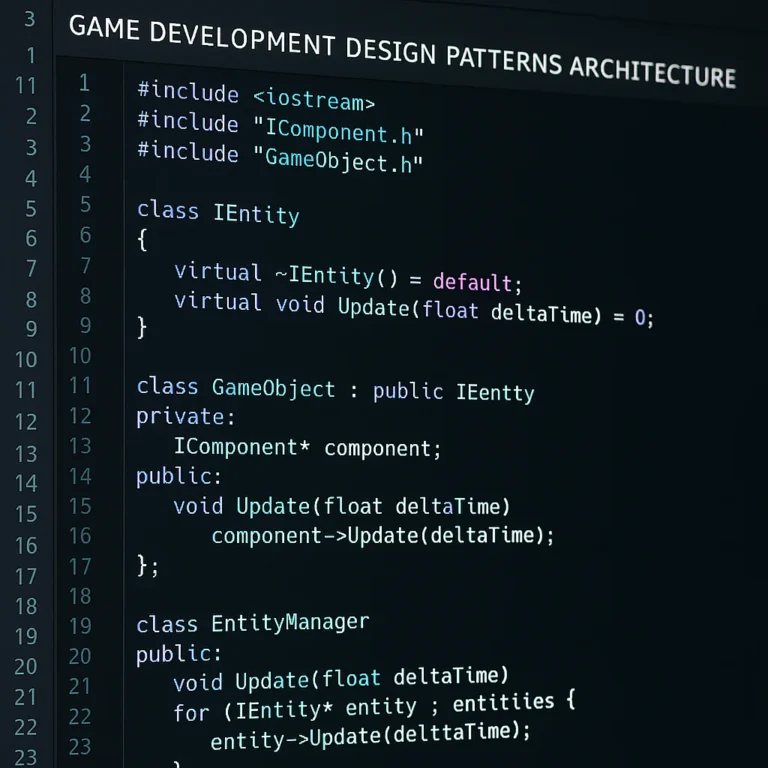
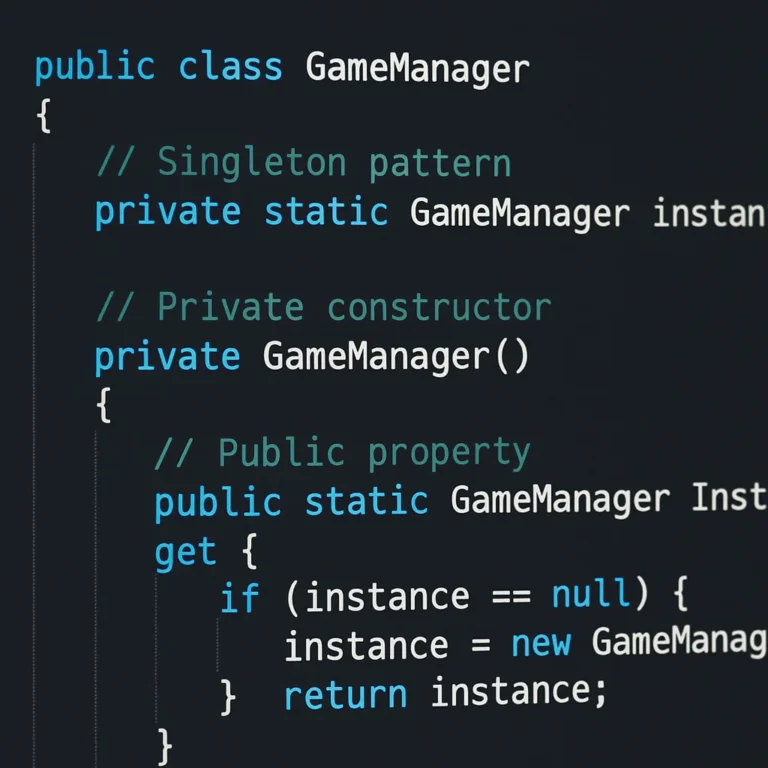
Support our educational content for free when you purchase through links on our site. Learn more
Stack Interfaces in Game Dev: 9 Pros & Cons You Must Know 🎮 (2026)


Have you ever paused a game, navigated through nested menus, or interacted with a dozen different objects using a single button — and wondered how developers keep all that complexity under control? The secret sauce often involves a clever combo: stack data structures paired with programming interfaces. Together, they form what’s known as a stack interface — a pattern that can make or break your game’s architecture.
In this article, we’ll unpack the advantages and disadvantages of using stack interfaces in game development, drawing from real-world examples, expert insights, and practical tips from our team at Stack Interface™. Curious how a single “interact” command can handle doors, NPCs, and treasure chests seamlessly? Or why some developers shy away from interfaces despite their power? Stick around — by the end, you’ll know exactly when and how to wield stack interfaces like a pro.
Key Takeaways
- Stack interfaces combine LIFO data structures with programming interfaces to manage dynamic game states and behaviors efficiently.
- They boost code modularity, reusability, and simplify complex UI and game state management.
- Potential downsides include initial complexity, debugging challenges, and risk of over-engineering.
- Best suited for engines like Unity and Unreal, but principles apply broadly even where interfaces aren’t native.
- Mastering stack interfaces can unlock cleaner, more maintainable, and scalable game systems, saving you headaches down the line.
Ready to level up your game architecture? Let’s dive in!
Table of Contents
- ⚡️ Quick Tips and Facts About Stack Interfaces in Game Development
- 🕹️ The Evolution and Role of Stack Interfaces in Game Dev
- 1. What Exactly Is a Stack Interface? Breaking Down the Basics
- 2. Top Advantages of Using Stack Interfaces in Game Development
- 3. The Flip Side: Disadvantages and Limitations of Stack Interfaces
- 4. Real-World Examples: How Popular Games Use Stack Interfaces
- 5. Best Practices for Implementing Stack Interfaces in Your Game Projects
- 6. Comparing Stack Interfaces with Other Interface Patterns in Game Development
- 7. Expert Tips: Avoiding Common Pitfalls When Using Stack Interfaces
- 8. Tools and Libraries That Support Stack Interface Implementation
- 9. Future Trends: Where Are Stack Interfaces Headed in Game Development?
- 🔚 Conclusion: Should You Use Stack Interfaces in Your Game Development?
- 🔗 Recommended Links for Deep Diving into Stack Interfaces
- ❓ Frequently Asked Questions About Stack Interfaces in Games
- 📚 Reference Links and Further Reading
⚡️ Quick Tips and Facts About Stack Interfaces in Game Development
Ever wondered how your favorite game seamlessly transitions from intense combat to a serene pause menu? Or how a single “interact” button can open a door, pick up an item, or talk to an NPC? The magic often lies in a powerful, yet sometimes overlooked, concept: stack interfaces. At Stack Interface™, we’ve seen firsthand how mastering this pattern can transform your game development workflow.
Here are some rapid-fire facts and tips to get your brain buzzing:
- What is it? A stack interface, in the context of game development, often refers to using the Stack data structure to manage game states (like menus, gameplay, cutscenes) combined with programming interfaces (like C# interfaces) to define common behaviors across disparate game objects. It’s about defining what an object can do, not what it is.
- LIFO Power: The core of a stack is Last-In, First-Out (LIFO). Think of a stack of plates: you always add to the top and remove from the top. This makes it perfect for managing temporary states.
- Game State Management: ✅ Ideal for handling nested game states. Push a pause menu onto the stack, and the game state underneath is paused. Pop the menu, and the game resumes right where it left off.
- Modularity & Reusability: Interfaces allow you to define contracts for behavior. An
IInteractableinterface means any object (a door, a chest, an NPC) can be interacted with, simplifying your interaction logic. - Performance: Stacks are generally very efficient for memory allocation and access, especially when used for call stacks or small, temporary data. However, deep recursion can lead to stack overflow ❌.
- Common Engines: Widely applicable in object-oriented engines like Unity (C#) and Unreal Engine (C++), where polymorphism and interface-based design are core tenets.
- LSI Keywords: Game state management, UI systems, input handling, code modularity, design patterns, C# interfaces, data structures, memory efficiency, debugging game logic.
🕹️ The Evolution and Role of Stack Interfaces in Game Dev
Back in the early days of gaming, code was often a monolithic beast. Spaghetti code was the norm, and managing complex interactions or multiple game states felt like wrestling an octopus in a phone booth. As games grew more ambitious, developers desperately needed ways to organize their code, make it more flexible, and allow different parts of the game to communicate without knowing every intricate detail of each other. Enter the humble, yet mighty, stack interface.
The concept of a “stack” as a data structure has been fundamental to computer science since its inception, powering everything from CPU operations to function calls. But its application in game development, particularly when combined with the power of programming interfaces, has evolved significantly.
Initially, game state management might have involved large switch statements or complex state machines. While effective, these could quickly become unwieldy. The adoption of object-oriented programming (OOP) languages like C++ and later C# brought with it the power of polymorphism and abstraction. This is where interfaces truly began to shine.
We at Stack Interface™ have seen this evolution firsthand. Our journey, much like the industry’s, has been about finding elegant solutions to complex problems. The idea of a “stack interface” isn’t just about using a Stack<T> data structure; it’s about applying the principles of stacking (LIFO) to manage dynamic elements, and using programming interfaces to define clear contracts for how those elements behave. This combination allows for incredibly robust and flexible systems, from managing UI layers to handling player abilities. It’s a cornerstone of modern, maintainable game architecture, allowing teams to build bigger, more intricate worlds without getting lost in a labyrinth of dependencies. Want to dive deeper into how we approach these challenges? Check out our insights on Stack Interface.
1. What Exactly Is a Stack Interface? Breaking Down the Basics
Alright, let’s peel back the layers and get to the core of what we mean by “stack interface” in game development. It’s a bit of a two-for-one deal, combining two powerful concepts: the Stack data structure and programming interfaces.
1.1 The Stack Data Structure: A LIFO Love Story 📚
Imagine a stack of freshly baked pancakes 🥞. When you add a new pancake, it goes on top. When you want to eat one, you take it from the top. You can’t just pull one from the middle without making a mess! This, my friends, is the essence of Last-In, First-Out (LIFO).
In programming, a stack is an abstract data type that serves as a collection of elements, with two principal operations:
- Push: Adds an element to the top of the stack.
- Pop: Removes the most recently added element from the top of the stack.
Other common operations include Peek (look at the top element without removing it) and IsEmpty (check if the stack has any elements).
Why is this useful in games? Think about a game’s UI. When you open a pause menu, then an options menu from within the pause menu, then a graphics settings menu from within the options menu… you’re essentially pushing new UI screens onto a stack. When you close the graphics settings, you pop it off, revealing the options menu. Close that, pop, and you’re back to the pause menu. It’s a natural fit for managing temporary, layered states.
| Stack Operation | Description | Game Dev Example |
|---|---|---|
| **Push(element)** | Adds an element to the top. | Opening a new menu screen (e.g., `Push(OptionsMenu)`). |
| **Pop()** | Removes and returns the top element. | Closing the current menu screen (e.g., `Pop()`). |
| **Peek()** | Returns the top element without removing it. | Checking which menu is currently active without closing it. |
| **IsEmpty()** | Checks if the stack contains any elements. | Determining if any menus are open. |
1.2 Programming Interfaces: The Contract Keepers 🤝
Now, let’s talk about the “interface” part. In object-oriented programming (OOP) languages like C# (Unity’s primary language) or Java, an interface is a contract. It defines a set of methods, properties, or events that a class must implement if it claims to adhere to that interface. It specifies what a class can do, but not how it does it.
Consider this: you have various interactable objects in your game – a door, a treasure chest, an NPC. Each needs to respond to the player’s “interact” action, but they’ll all do something different.
- A door might
Open()orClose(). - A chest might
Loot()orDisplayContents(). - An NPC might
StartDialogue()orGiveQuest().
Instead of writing separate logic for each, you can define an IInteractable interface:
public interface IInteractable { void Interact(); string GetInteractionPrompt(); } Now, any class that implements IInteractable must provide its own Interact() method.
public class Door : MonoBehaviour, IInteractable { public void Interact() { /* Logic to open/close door */ } public string GetInteractionPrompt() { return "Press E to Open"; } } public class TreasureChest : MonoBehaviour, IInteractable { public void Interact() { /* Logic to open chest and give loot */ } public string GetInteractionPrompt() { return "Press E to Loot"; } } This is incredibly powerful for code modularity and reusability. As the Unity forum discussion on interfaces highlights, this approach “simplifies code by enabling actions like opening doors or picking up items with a single check” and “eliminates the need for tags or layers.” You can simply check if (gameObject.GetComponent<IInteractable>() is IInteractable interactable) interactable.Interact(); – no need for if (tag == "Door") or if (layer == "Chest"). This makes your code cleaner, more extensible, and easier to manage. For more on structuring your code effectively, check out our Coding Best Practices section.
1.3 The “Stack Interface” Synergy in Game Dev
So, when we talk about a “stack interface” in game development, we’re often talking about the synergy of these two concepts:
- Using a Stack data structure to manage a sequence of dynamic elements (like game states, UI panels, or active abilities).
- Ensuring those elements adhere to a common programming interface (e.g.,
IGameState,IUIPanel,IAbility) so they can be managed generically by the stack.
This combination allows you to build highly flexible and organized systems where different game components can be dynamically pushed and popped, all while adhering to a predictable contract. It’s like having a universal remote for all your game’s dynamic elements! 🎮
2. Top Advantages of Using Stack Interfaces in Game Development
Why bother with stack interfaces? Because they’re not just a fancy academic concept; they’re a practical toolkit for building robust, scalable, and maintainable games. From our trenches at Stack Interface™, we’ve seen how these patterns can elevate a project from a tangled mess to a beautifully orchestrated symphony.
2.1 Enhancing Code Modularity and Reusability
This is arguably the crown jewel of interface-driven design. Imagine a game with dozens of interactable objects: doors, levers, NPCs, treasure chests, health pickups, quest givers. Without interfaces, you might end up with a giant PlayerInteraction script that looks something like this:
// The 'old' way (simplified, but you get the idea!) void HandleInteraction(GameObject target) { if (target.CompareTag("Door")) { target.GetComponent<Door>().Open(); } else if (target.CompareTag("Chest")) { target.GetComponent<Chest>().Loot(); } else if (target.CompareTag("NPC")) { target.GetComponent<NPC>().StartDialogue(); } // ... and so on, forever and ever. } ❌ This approach is a maintenance nightmare! Every time you add a new interactable type, you have to modify this central script. It’s tightly coupled, hard to test, and prone to bugs.
With interfaces, you define a contract: IInteractable. Any object that implements this interface promises to have an Interact() method.
// The 'interface' way public interface IInteractable { void Interact(GameObject instigator); // 'instigator' could be the player string GetInteractionPrompt(); } public class Door : MonoBehaviour, IInteractable { public void Interact(GameObject instigator) { Debug.Log("Door opening!"); /* Open door logic */ } public string GetInteractionPrompt() { return "Open Door"; } } public class NPC : MonoBehaviour, IInteractable { public void Interact(GameObject instigator) { Debug.Log("Starting dialogue with NPC!"); /* Dialogue logic */ } public string GetInteractionPrompt() { return "Talk"; } } // Player interaction script becomes much cleaner void HandleInteraction(GameObject target) { IInteractable interactable = target.GetComponent<IInteractable>(); if (interactable != null) { interactable.Interact(this.gameObject); // 'this.gameObject' is the player Debug.Log($"Interacting: {interactable.GetInteractionPrompt()}"); } } ✅ Voila! Now, your PlayerInteraction script doesn’t care what the object is, only that it’s IInteractable. This is the essence of polymorphism and loose coupling. New interactable types can be added without touching the player’s script. This significantly boosts code modularity and reusability, making your codebase much more manageable. As the Unity forum post eloquently puts it, interfaces allow you to “facilitate interaction with various objects (e.g., chickens, cars) through a common interface.” It’s a game-changer for complex systems.
2.2 Simplifying Complex Game State Management
Games are rarely linear. They have menus, pause screens, cutscenes, loading screens, gameplay, mini-games, and more. Managing these transitions and ensuring the correct state is active (and the inactive ones are properly suspended) can be a headache. This is where the stack data structure part of “stack interface” truly shines.
Imagine a GameStateManager that uses a Stack<IGameState>.
- When the game starts,
Push(GameplayState). - Player presses ESC:
Push(PauseMenuState). TheGameplayStateis now at the bottom of the stack, effectively paused. - From the pause menu, player opens options:
Push(OptionsMenuState).PauseMenuStateis now below it. - Player closes options:
Pop().PauseMenuStatebecomes active again. - Player closes pause menu:
Pop().GameplayStateresumes.
Each IGameState interface could define methods like Enter(), Exit(), Update(), Render().
public interface IGameState { void Enter(); void Exit(); void Update(); void Render(); } public class GameplayState : IGameState { /* ... implementation ... */ } public class PauseMenuState : IGameState { /* ... implementation ... */ } public class OptionsMenuState : IGameState { /* ... implementation ... */ } public class GameStateManager { private Stack<IGameState> _stateStack = new Stack<IGameState>(); public void PushState(IGameState newState) { if (_stateStack.Count > 0) { _stateStack.Peek().Exit(); // Exit the current active state } _stateStack.Push(newState); newState.Enter(); // Enter the new state } public void PopState() { if (_stateStack.Count > 0) { _stateStack.Pop().Exit(); // Exit the state being removed if (_stateStack.Count > 0) { _stateStack.Peek().Enter(); // Re-enter the previous state } } } public void UpdateCurrentState() { if (_stateStack.Count > 0) { _stateStack.Peek().Update(); } } // ... similar for Render() } This pattern provides a clear, predictable flow for game state management. It’s incredibly robust for nested menus, cinematic sequences, or any scenario where you need to temporarily suspend one part of the game to focus on another, then seamlessly return. It’s a common and highly recommended design pattern for game developers.
2.3 Boosting Performance and Memory Efficiency
While interfaces themselves don’t directly boost performance (they can even introduce a tiny, negligible overhead due to virtual method calls), the stack data structure and the principles behind interface-driven design can lead to significant performance and memory benefits.
- Efficient Memory Allocation: Stacks are inherently efficient. When you push and pop elements, memory is typically allocated and deallocated in a very predictable, contiguous manner (often on the CPU’s call stack or a dedicated memory pool for the data structure). This can be faster than heap allocations, which can lead to fragmentation and slower access times. For small, temporary objects, using a stack can reduce garbage collection pressure in languages like C#.
- Reduced Garbage Collection (GC) Overhead: By using interfaces to manage objects that might otherwise be created and destroyed frequently (e.g., temporary UI elements, ability effects), you can design systems that reuse objects from pools rather than constantly allocating new ones. While not a direct feature of “stack interfaces,” the modularity they enable facilitates object pooling, a common game optimization technique. This is where the perspective from the first YouTube video on Rust becomes highly relevant. Rust, a systems programming language, emphasizes memory safety without garbage collection, achieving performance comparable to C/C++ while preventing common memory bugs. The video highlights how companies like Discord and Dropbox achieved significant performance gains by rewriting services in Rust, eliminating “garbage collection spikes.” While C# and Java rely on GC, understanding the performance implications of memory management, as Rust demonstrates, is crucial. Designing your C# game logic with interfaces can help you write code that is more amenable to optimizations like object pooling, thus indirectly reducing GC overhead.
- Clearer Code, Fewer Bugs: This might seem indirect, but cleaner, more modular code (a direct benefit of interfaces) is inherently easier to optimize. When you can clearly identify responsibilities and dependencies, you can pinpoint performance bottlenecks more easily. Fewer bugs mean less time debugging and more time optimizing.
- Optimized UI Systems: As mentioned, stacks are perfect for UI layers. A well-implemented UI stack ensures that only the active UI elements are being processed and rendered, while inactive ones are suspended. This prevents unnecessary computations and drawing calls, leading to better frame rates. The Unity forum discussion also touches on this, showing how interfaces can be used to dynamically manage UI buttons:
actionEat.SetActive((itemRef is IUse) ? true : false);. This dynamic activation/deactivation based on interface implementation is a powerful optimization.
3. The Flip Side: Disadvantages and Limitations of Stack Interfaces
No tool is a silver bullet, and stack interfaces are no exception. While incredibly powerful, they come with their own set of challenges and potential pitfalls. As an expert team, we believe in balancing perspectives, and it’s crucial to understand where stack interfaces might trip you up.
3.1 Potential Overhead and Complexity
This is a big one, and it’s precisely why, as the Unity forum discussion points out, “Many people avoid developing interfaces as they feel they are either A) Too complex of an idea or B) Fill a very, very specific need…” Let’s unpack that.
- Initial Learning Curve: For developers new to OOP principles, interfaces can feel abstract and unnecessary. Why define a contract when you can just implement the methods directly? Understanding the benefits of abstraction and polymorphism takes time and experience.
- Over-Engineering: The temptation to create an interface for everything can be strong. If you define too many interfaces, or interfaces that are too granular, your codebase can become bloated with boilerplate code. This can actually increase complexity rather than reduce it. We’ve seen projects where developers created
IWalkable,IRunnable,ISwimmablewhen a singleIMoveablewith different movement implementations would have sufficed. - Virtual Method Call Overhead: In languages like C# and C++, calling a method through an interface involves a virtual method lookup. While modern compilers and runtimes are highly optimized, this is technically a tiny bit slower than a direct method call. For the vast majority of game logic, this overhead is negligible. However, in extremely performance-critical loops (e.g., thousands of calls per frame), it could theoretically add up. This is rarely a real-world bottleneck, but it’s a technical detail worth noting.
- Increased File Count: Every interface typically lives in its own file. For large projects, this can mean a proliferation of small files, which some developers find cumbersome to navigate.
Our Take: The perceived complexity often stems from misuse or lack of understanding. When applied judiciously, interfaces reduce complexity by enforcing clear contracts and promoting modularity. The key is to find the right balance – don’t over-engineer, but don’t shy away from them when they genuinely simplify your design.
3.2 Debugging Challenges in Deep Stack Layers
While a stack-based state management system offers incredible clarity in its structure, it can introduce some unique debugging challenges, especially when the stack gets deep or when states interact in unexpected ways.
- Tracing Execution Flow: When you have multiple states pushed onto a stack, and each state has its own
Enter(),Exit(),Update()methods, tracing the exact flow of execution can become tricky. A bug might originate in a state that’s currently “paused” underneath several other states, or anExit()method might not properly clean up, leading to issues when the previous state is re-entered. - State-Dependent Bugs: Bugs might only manifest when a specific sequence of states is pushed and popped. For example, a resource might not be released when a menu is popped, leading to a memory leak or a null reference exception when the underlying gameplay state tries to access it later.
- Interface Implementation Issues: If an interface method isn’t implemented correctly in one of the concrete classes, the error might not be immediately obvious, especially if the
Interact()method (for example) is called generically. You might need to step through the code to see which specific implementation is being invoked. - Stack Overflow (Literal): While rare in typical game state management (unless you have an infinite loop of pushing states), recursive functions that don’t have a proper base case can lead to a literal stack overflow error, crashing your application. This is more about the call stack than your custom game state stack, but it’s a reminder of the underlying mechanism.
Tip: Use robust logging and debugging tools. Print the current state stack whenever a state is pushed or popped. Implement clear Debug.Log messages within Enter() and Exit() methods. Modern IDEs like Visual Studio and Rider offer excellent debugging capabilities for stepping through code and inspecting variables, even across interface boundaries.
3.3 Compatibility Issues with Certain Game Engines
While interfaces are a cornerstone of many modern OOP languages, their direct implementation and utility can vary across different game engines and their primary scripting languages.
- Unity (C#): Unity embraces C# interfaces wholeheartedly. They integrate seamlessly with
MonoBehaviourcomponents and plain C# classes. You can useGetComponent<T>()to retrieve components that implement a specific interface, making it very powerful. - Unreal Engine (C++): C++ has abstract classes and pure virtual functions, which serve a similar purpose to interfaces. Unreal Engine also has its own concept of “Blueprint Interfaces” which allow C++ classes and Blueprint classes to communicate through a common contract. So, while not identical to C# interfaces, the concept is strongly supported.
- Godot Engine (GDScript/C#): This is where things get interesting. The Godot Engine’s primary language, GDScript, does not have explicit interfaces in the C# or Java sense. It relies more on duck typing (if it walks like a duck and quacks like a duck, it’s a duck) and abstract classes or virtual methods for polymorphism.
- As the Godot Engine language adoption discussion highlights, “GDScript remains the core language, with ongoing support and development.” While C# support in Godot is improving, and C# does allow interfaces, the core GDScript ecosystem doesn’t use them directly. This means if you’re primarily developing in GDScript, you’ll achieve similar modularity through different patterns.
- The discussion also notes that “C# still causes some headaches despite improvements” in Godot. So, while you can use C# with interfaces in Godot, you might encounter some integration challenges compared to a C#-native engine like Unity.
- Other Engines/Frameworks: Engines built on languages without strong OOP interface support (e.g., some older Lua-based engines, or very custom engines) might require you to implement similar patterns manually using delegates, function pointers, or custom message passing systems.
Our Recommendation: Always consider your chosen engine’s strengths and weaknesses. If you’re in Unity, embrace C# interfaces! If you’re in Godot with GDScript, learn to leverage its duck typing and node-based polymorphism effectively. The principles of modularity and clear contracts remain valid, even if the implementation details differ. For more on backend technologies and how they influence game development, check out our Back-End Technologies section.
4. Real-World Examples: How Popular Games Use Stack Interfaces
It’s one thing to talk theory, but how do these concepts actually play out in the wild? From indie darlings to AAA blockbusters, stack interfaces (or their conceptual equivalents) are hard at work behind the scenes, making games more robust and dynamic.
4.1 UI and Menu Systems: The Obvious Champion 🏆
This is perhaps the most straightforward and widely adopted use case. Almost every game uses a stack-like system for its user interface.
- Pause Menus: Think of any game where you hit ESC. A pause menu pops up. You can often navigate to an options menu, then a graphics settings menu. Each new menu is pushed onto a UI stack. Closing them pops them off in reverse order. Games like The Witcher 3: Wild Hunt or Cyberpunk 2077 with their intricate, layered menus are perfect examples.
- Inventory/Crafting Screens: Often, these are modal windows that appear on top of the gameplay. You push the inventory screen, interact with it, then pop it to return to the game.
- Dialogue Systems: When an NPC initiates dialogue, a dialogue UI panel is pushed. Choices might push sub-panels. When the conversation ends, the panels are popped.
How interfaces help: Each UI panel could implement an IUIPanel interface with methods like Show(), Hide(), OnInput(). The UIManager simply manages a Stack<IUIPanel>, calling these generic methods without needing to know the specific type of menu. This makes adding new UI elements incredibly easy and consistent.
4.2 Interactable Objects: A Universal Language 🗣️
We touched on this earlier, but it’s worth reiterating with real-world impact. Games like The Elder Scrolls V: Skyrim or Grand Theft Auto V feature worlds teeming with interactable objects. You can open doors, pick up items, talk to NPCs, activate levers, sit on chairs, and much more, often with a single “interact” button.
IInteractable: As discussed, this interface allows a player’s interaction logic to be generic. The player simply checks if an object implementsIInteractableand callsInteract().- A door implements
IInteractabletoOpen()orClose(). - A chest implements
IInteractabletoLoot(). - An NPC implements
IInteractabletoStartDialogue(). - A lever implements
IInteractabletoActivate()a mechanism.
- A door implements
IPickupable: For items you can add to your inventory. ASword, aPotion, or aKeycould all implementIPickupable, allowing your inventory system to handle them generically.
This pattern is fundamental to creating rich, interactive environments without drowning in if-else statements. It’s about defining a common language for objects to speak.
4.3 Ability Systems and Status Effects: Dynamic Powers 💥
Many RPGs and action games feature complex ability systems and status effects.
- Player Abilities: A character might have multiple abilities (e.g.,
Fireball,Heal,Dash). Each ability could implement anIAbilityinterface with methods likeActivate(),Deactivate(),GetCooldown(). AnAbilityManagercould then manage a collection of these abilities. - Status Effects:
Poison,Stun,Buff,Debuff. Each of these could implement anIStatusEffectinterface withApply(),Remove(),UpdateEffect(). AStatusEffectManageron a character could maintain a list (or even a stack for temporary, overriding effects) of active effects, calling their genericUpdateEffect()method each frame.
This allows for highly extensible systems. Want to add a new ability or status effect? Just create a new class, implement the interface, and plug it into the system. No need to modify core game logic.
4.4 Input Handling: Adapting to Any Controller 🎮
Consider games that support multiple input devices: keyboard/mouse, Xbox controller, PlayStation controller, even custom flight sticks.
IInputDevice: AnIInputDeviceinterface could define methods likeGetMovementInput(),GetActionButtonPress(),IsMenuButtonPressed().KeyboardInput,XboxControllerInput,PSControllerInputclasses would each implement this interface, translating their specific hardware inputs into the generic interface methods.- The game’s core logic then simply queries the active
IInputDevicefor input, completely decoupled from the actual hardware. This is crucial for cross-platform games like Fortnite or Call of Duty, which support a wide array of input methods.
These examples demonstrate that stack interfaces aren’t just theoretical constructs; they are practical, powerful tools used by professional developers to build the games we love. They promote cleaner code, easier expansion, and more robust systems.
5. Best Practices for Implementing Stack Interfaces in Your Game Projects
Alright, you’re convinced! Stack interfaces are awesome. But how do you wield this power without accidentally summoning a code-monster? Here at Stack Interface™, we’ve learned a few things through countless hours of coding, debugging, and refactoring. Follow these best practices to ensure your stack interface implementations are clean, efficient, and maintainable.
5.1 Keep Interfaces Small and Focused (Single Responsibility Principle) 🎯
This is perhaps the most crucial rule. An interface should ideally have a single responsibility. Don’t try to cram every possible behavior into one giant interface.
- ✅ Good:
IInteractable(for interaction),IDamageable(for taking damage),IMoveable(for movement). - ❌ Bad:
IGameObjectwithInteract(),TakeDamage(),Move(),Render(),Save(), etc.
Why? Smaller interfaces are easier to understand, implement, and test. They promote loose coupling because a class only needs to implement the behaviors it truly needs. If you have a Door that’s IInteractable but not IDamageable, it doesn’t have to implement a TakeDamage() method that does nothing. This adheres to the Interface Segregation Principle, a key tenet of SOLID principles in OOP.
5.2 Favor Composition Over Inheritance (Where Appropriate) 🧱
While interfaces are often used with inheritance, remember that a class can implement multiple interfaces. This is a powerful form of composition.
- Instead of:
Enemyinherits fromCharacterwhich inherits fromDamageableEntity… - Consider:
EnemyimplementsIDamageable,IMoveable,ICombatant.
This allows for greater flexibility. A Rock might only implement IDamageable, while a Player implements IDamageable, IMoveable, IInventoryHolder, IAbilityUser. You compose behaviors rather than forcing them into a rigid inheritance hierarchy. The Unity forum post shows a great example of this: public class Item : MonoBehaviour, IUse, IPickup. This Item class composes IUse and IPickup behaviors.
5.3 Design for Testability 🧪
One of the unsung heroes of interface-driven design is testability. Because interfaces define contracts, you can easily create mock or stub implementations for testing purposes.
- If your
Playerinteracts with anIInteractable, you can create aMockDoororStubNPCthat implementsIInteractablefor your unit tests. This allows you to test the player’s interaction logic in isolation, without needing a full game scene or complex dependencies. - This is a cornerstone of robust Coding Best Practices and helps catch bugs early.
5.4 Document Your Interfaces Clearly 📝
Interfaces define a contract, but the expectations of that contract should be crystal clear.
- What does
Interact()mean? Does it always return true? Does it take parameters? - What are the preconditions and postconditions for each method?
- Use XML documentation comments (in C#) or similar tools to explain the purpose of the interface and each of its members. This helps other developers (and your future self!) understand how to correctly implement and use your interfaces.
5.5 Use Generics with Stacks for Type Safety 🛡️
When using the Stack<T> data structure, always use generics.
- ✅ Good:
Stack<IGameState>,Stack<IUIPanel>. - ❌ Bad:
Stack<object>(unless you have a very specific, advanced reason).
Using generics ensures type safety. You know exactly what kind of objects are expected on your stack, and the compiler will catch type mismatches at compile time, preventing runtime errors.
5.6 Consider the “Stack” Part Carefully: When to Use It, When Not To 🤔
While the “interface” part is almost always beneficial for modularity, the “stack” data structure part is best suited for specific scenarios.
- Use a Stack when: You need LIFO behavior for temporary, layered states (UI, game states, undo/redo).
- Don’t use a Stack when: You need random access to elements, or when the order of removal isn’t strictly LIFO (e.g., a list of all enemies in a scene, which is better suited for a
ListorHashSet).
By adhering to these best practices, you’ll harness the full power of stack interfaces, creating game systems that are not only functional but also a joy to work with.
6. Comparing Stack Interfaces with Other Interface Patterns in Game Development
The world of game development is rich with design patterns and architectural choices. While stack interfaces are incredibly useful, they’re not the only game in town. Understanding how they stack up (pun intended!) against other common patterns will help you make informed decisions for your projects.
6.1 Stack Interfaces vs. Abstract Classes 🧑 🏫
This is a classic OOP debate! Both interfaces and abstract classes provide a blueprint for other classes, but they have key differences.
| Feature | Programming Interface (e.g., C# `interface`) | Abstract Class |
|---|---|---|
| **Purpose** | Defines a contract for behavior. “What a class *can* do.” | Provides a base for related classes, often with common implementation. “What a class *is*.” |
| **Implementation** | No implementation details; only method signatures. (C# 8.0+ allows default implementations, but the core idea remains contract-focused). | Can have concrete methods, fields, and properties, as well as abstract (unimplemented) members. |
| **Multiple Inheritance** | A class can implement multiple interfaces. ✅ | A class can inherit from only one abstract class. ❌ |
| **Fields/State** | Cannot define fields (state). | Can define fields and maintain state. |
| **Use Case** | Defining capabilities (e.g., `IInteractable`, `IDamageable`). | Providing common base functionality for a family of objects (e.g., `AbstractEnemy`, `BaseWeapon`). |
When to choose which?
- Interfaces: When you need to define a capability that can be shared across otherwise unrelated classes (e.g., a
Doorand anNPCcan both beIInteractable). This is where the “stack interface” pattern truly shines for modularity. - Abstract Classes: When you have a clear “is-a” relationship and want to provide some default behavior or shared state for a group of related classes (e.g., all
Enemytypes share aHealthproperty and aTakeDamagemethod, butAttackis abstract).
6.2 Stack Interfaces vs. Events and Delegates 📢
Events and delegates (or signals in Godot) are powerful for decoupling communication between objects.
- Events/Delegates: Allow objects to “broadcast” messages without knowing who is listening. A
PlayermightOnPlayerDiedevent, and aUIManagerand aGameManagercan both subscribe to it. - Stack Interfaces: Define how an object should behave when acted upon (e.g.,
Interact(),PushState()).
Synergy, not competition: These patterns often work best together. An IInteractable object might have an OnInteracted event that it fires after its Interact() method is called. This allows other systems to react to the interaction without the IInteractable object needing to know about them.
6.3 Stack Interfaces vs. ScriptableObjects (Unity Specific) 📜
In Unity, ScriptableObjects are data containers that live outside of scenes. They are fantastic for storing shared data, configurations, or even defining behaviors that can be reused across multiple game objects.
- ScriptableObjects: Excellent for data-driven design, asset management, and creating reusable “blueprints” for systems (e.g., an
AbilityDataScriptableObject). - Stack Interfaces: Define runtime behavior and contracts.
Complementary roles: You can combine them! An IAbility interface could be implemented by a MonoBehaviour on a character, but the data for that ability (cooldown, damage, animation clips) could be stored in a ScriptableObject that the IAbility implementation references. This creates a powerful separation of concerns: behavior (interface) and data (ScriptableObject).
6.4 Stack Interfaces vs. Component-Based Design (ECS) 🧩
Modern game engines like Unity (with its DOTS/ECS) and even Unreal Engine are moving towards more component-based or Entity-Component-System (ECS) architectures.
- Component-Based: Objects are composed of many small, specialized components (e.g., a
Playermight have aMovementComponent,HealthComponent,InventoryComponent). - Stack Interfaces: Define contracts for these components.
The perfect marriage: Interfaces fit beautifully into component-based design. Each component can implement one or more interfaces, allowing the system to query for specific capabilities. For example, a HealthComponent might implement IDamageable, and a MovementComponent might implement IMoveable. This allows systems to interact with components based on their capabilities, rather than their concrete type, which is a core tenet of ECS. For more on advanced software architectures, explore our insights on AI in Software Development and Data Science.
Ultimately, the choice isn’t about picking one pattern. It’s about understanding the strengths of each and knowing how to combine them effectively to build robust, scalable, and maintainable game systems. Stack interfaces, with their focus on clear contracts and LIFO state management, are a powerful arrow in your architectural quiver.
7. Expert Tips: Avoiding Common Pitfalls When Using Stack Interfaces
Even with the best intentions, it’s easy to stumble when implementing stack interfaces. From our collective experience at Stack Interface™, we’ve seen (and made!) our fair share of mistakes. Here are some expert tips to help you navigate the treacherous waters and avoid common pitfalls.
7.1 Don’t Over-Engineer: Start Simple, Refactor Later 🛠️
This is the golden rule. The allure of a perfectly abstract, infinitely extensible system can lead to premature optimization and over-engineering.
- Pitfall: Creating interfaces for every single method, even when there’s no clear need for polymorphism or multiple implementations. You end up with an
IJumpableinterface for a singleJump()method that only one class implements. - Expert Tip: Start with concrete classes. If you later find yourself writing
if (obj is Player) { /* player logic */ } else if (obj is Enemy) { /* enemy logic */ }repeatedly for a common action, that’s your cue to introduce an interface (e.g.,IDamageable). Interfaces should emerge from a clear need, not from an abstract desire for “good design.”
7.2 Be Mindful of Performance in Hot Paths (But Don’t Obsess) 🔥
While interface method calls have a tiny overhead, it’s usually negligible. However, in extremely performance-critical sections of your code (often called “hot paths”), it’s worth being aware.
- Pitfall: Using interfaces in a loop that iterates thousands of times per frame, where every microsecond counts, without profiling.
- Expert Tip: Profile, profile, profile! Don’t prematurely optimize. If your game is running slowly, use a profiler (like Unity’s Profiler or Visual Studio’s Performance Profiler) to identify bottlenecks. If an interface call is genuinely causing a slowdown, you might consider alternative patterns (like direct method calls if polymorphism isn’t strictly needed, or using structs for very small, frequently accessed data). But for 99% of game logic, the performance impact is a non-issue.
7.3 Handle Null References Gracefully 👻
When retrieving components that implement interfaces, always check for null.
- Pitfall: Assuming
GetComponent<IInteractable>()will always return a valid object. If the targetGameObjectdoesn’t have a component implementing that interface,GetComponentreturnsnull, leading to aNullReferenceExceptionwhen you try to call a method on it. - Expert Tip: Use null checks or the
isoperator with pattern matching (in C#) for safety.// Old way IInteractable interactable = target.GetComponent<IInteractable>(); if (interactable != null) { interactable.Interact(this.gameObject); } // C# 7.0+ pattern matching - cleaner! if (target.GetComponent<IInteractable>() is IInteractable interactable) { interactable.Interact(this.gameObject); }This ensures your code is robust even when objects don’t implement the expected interface.
7.4 Avoid “God Interfaces” 🙏
Just as there are “God Objects” (classes that do too much), there can be “God Interfaces” that try to define too many unrelated behaviors.
- Pitfall: Creating an
IEntityinterface with methods for movement, combat, inventory, AI, rendering, and saving. - Expert Tip: Stick to the Single Responsibility Principle (as discussed in Best Practices). Break down complex behaviors into smaller, focused interfaces. An
ICombatantfor combat, anIMoveablefor movement, anIInventoryHolderfor inventory. A single class can then implement multiple small interfaces, making it much more flexible and understandable.
7.5 Don’t Confuse Interface with Implementation 🤯
Interfaces define what can be done, not how it’s done.
- Pitfall: Expecting an interface to provide default behavior or state.
- Expert Tip: Remember that interfaces are contracts. If you need shared default implementation or state, an abstract class is usually a better fit. If you’re using C# 8.0+, you can add default implementations to interface methods, but use this sparingly and only when the default truly makes sense for all implementers, or when adding a new method to an existing interface without breaking old code.
7.6 Manage Your Stack State Carefully 🔄
When using the Stack<T> data structure for game states or UI, ensure proper entry and exit logic.
- Pitfall: Forgetting to call
Exit()on a state when it’s popped, orEnter()on the new active state. This can lead to resources not being released, UI elements remaining active, or game logic continuing to run when it shouldn’t. - Expert Tip: Implement clear
Enter()andExit()methods in yourIGameStateorIUIPanelinterfaces. Ensure yourStateManagerorUIManagerreliably calls these methods when pushing or popping states. This is critical for preventing memory leaks and ensuring correct game behavior.
By keeping these tips in mind, you’ll be well on your way to leveraging stack interfaces effectively, building cleaner, more maintainable, and ultimately, more enjoyable games.
8. Tools and Libraries That Support Stack Interface Implementation
Implementing stack interfaces isn’t a solitary endeavor. Modern programming languages and game engines provide robust support, making it easier than ever to adopt these powerful patterns. Let’s look at the key tools and libraries that empower developers to use stack interfaces effectively.
8.1 Core Language Features: C#, Java, C++ 💻
The foundation for programming interfaces lies within the languages themselves.
- C# (Unity): C# has first-class support for interfaces. The
interfacekeyword is a core language feature. You can define interfaces, implement multiple interfaces on a single class, and useGetComponent<T>()to retrieve components that implement specific interfaces. This makes Unity an incredibly fertile ground for interface-driven design.- Microsoft .NET Framework / .NET Core: The underlying framework for C# provides the
System.Collections.Generic.Stack<T>class, which is the go-to for implementing stack data structures.
- Microsoft .NET Framework / .NET Core: The underlying framework for C# provides the
- Java (Android Games, Desktop Games): Similar to C#, Java also has robust
interfacesupport. Thejava.util.Stackclass (though oftenDequeis preferred for more flexibility) is available for stack data structures. - C++ (Unreal Engine, Custom Engines): While C++ doesn’t have an
interfacekeyword in the same way C# or Java does, it achieves the same functionality through abstract classes with pure virtual functions. A class with at least one pure virtual function is abstract and cannot be instantiated directly; it serves as a contract for derived classes.// C++ equivalent of an interface class IInteractable { public: virtual void Interact() = 0; // Pure virtual function virtual ~IInteractable() {} // Virtual destructor is good practice }; class Door : public IInteractable { public: void Interact() override { /* Door interaction logic */ } };C++ also has the
std::stackcontainer adapter for stack data structures.
8.2 Game Engines: Unity, Unreal Engine, Godot 🎮
These engines provide the environment and tools to integrate interface patterns into your game logic.
- Unity (C#):
MonoBehaviourand Interfaces: You can haveMonoBehaviourclasses implement interfaces directly.GetComponent<T>(): This method is crucial for retrieving components that implement a specific interface.ScriptableObject: While not an interface itself,ScriptableObjects can be designed to work with interfaces, providing data-driven behavior.- Unity.Collections.NativeStack
(DOTS/ECS): For performance-critical scenarios in Unity’s Data-Oriented Technology Stack (DOTS),NativeStack<T>offers a high-performance, unmanaged stack that can be used with Burst compiler for extreme speed. - CHECK OUT: Unity Official Website
- Unreal Engine (C++ / Blueprints):
- Blueprint Interfaces: Unreal Engine has a powerful concept of Blueprint Interfaces. These allow C++ classes and Blueprint classes to define common functions that can be called on any object implementing that interface, regardless of whether it’s C++ or Blueprint. This is incredibly flexible for mixed-language projects.
- C++ Abstract Classes: As mentioned, C++ abstract classes with pure virtual functions are used for interface-like behavior in C++ code.
- CHECK OUT: Unreal Engine Official Website
- Godot Engine (GDScript / C#):
- GDScript: While GDScript doesn’t have explicit interfaces, it relies on duck typing and signals/slots for polymorphism and communication. You can achieve similar modularity by ensuring objects have the expected methods.
- C# in Godot: If you’re using C# in Godot, you can use C# interfaces just like in Unity. However, as the Godot forum discussion points out, there might be some integration nuances compared to GDScript or a C#-native engine.
- CHECK OUT: Godot Engine Official Website
8.3 IDEs and Debuggers: Your Best Friends 🤝
Integrated Development Environments (IDEs) and debuggers are indispensable for working with interfaces, especially when tracing complex logic.
- Visual Studio (for C# / C++): The industry standard for C# and C++ development. Features like “Go to Definition,” “Find All References,” and powerful debugging tools (step-through, breakpoints, variable inspection) are essential for understanding interface implementations and tracking execution flow.
- JetBrains Rider (for C#): A fantastic alternative to Visual Studio, known for its superior code analysis, refactoring tools, and deep integration with Unity. Rider makes navigating interface hierarchies and finding implementations a breeze.
- VS Code (for various languages): A lightweight, highly extensible code editor that, with the right extensions, can provide excellent support for C#, C++, and GDScript, including debugging capabilities.
These tools, combined with a solid understanding of design patterns, will empower you to build sophisticated and maintainable game systems using stack interfaces.
9. Future Trends: Where Are Stack Interfaces Headed in Game Development?
The landscape of game development is constantly evolving, driven by new hardware, programming paradigms, and player expectations. So, where do stack interfaces fit into this exciting future? We at Stack Interface™ believe their core principles will remain vital, even as their implementation details might shift.
9.1 Deeper Integration with Data-Oriented Design (DOD) and ECS 🚀
The industry is increasingly moving towards Data-Oriented Design (DOD) and Entity-Component-System (ECS) architectures, especially for performance-critical systems.
- Current Trend: Unity’s DOTS (Data-Oriented Technology Stack) is a prime example, emphasizing data locality and cache efficiency. Unreal Engine also leverages component-based systems heavily.
- Future Role of Interfaces: While traditional OOP interfaces might seem at odds with pure data-oriented approaches, the concept of defining capabilities remains crucial. In an ECS, components define data, and systems define behavior. Interfaces can still be used to define contracts for these systems or for specific “tags” on entities that indicate a capability. For instance, an
IProcessableSysteminterface could define how a system interacts with entities, or anIEventTriggerinterface could be implemented by a component that fires specific events. - Prediction: We’ll see interfaces used more strategically to define the behavioral contracts of systems and components, rather than just individual game objects. This will allow for highly optimized, yet still modular, game logic.
9.2 Enhanced Tooling and Editor Integration 🛠️
As interfaces become more prevalent, expect game engines and IDEs to offer even better support for them.
- Current State: Unity’s Inspector can show you which interfaces a
MonoBehaviourimplements, and IDEs like Rider excel at navigating interface hierarchies. - Future Enhancements: Imagine visual tools within the engine editor that allow you to define interfaces, automatically generate stub implementations, or even visualize the “stack” of active game states or UI panels. This could greatly reduce the learning curve and improve developer productivity. We might see more sophisticated “interface-driven” inspectors that dynamically adjust based on the interfaces a component implements, similar to how the Unity forum post describes dynamically showing/hiding UI buttons based on
IUseorIEquip.
9.3 Cross-Language and Multi-Paradigm Compatibility 🌐
With the rise of polyglot development (using multiple languages in a single project) and engines supporting various scripting options (like Godot with GDScript and C#), interfaces will play a key role in bridging these gaps.
- Current Challenge: As seen in the Godot discussion, different languages have different ways of achieving polymorphism.
- Future Solution: Standardized interface definitions (perhaps through schema languages or engine-level contracts) could allow components written in C# to interact seamlessly with systems written in C++ or even visual scripting languages. This would enable developers to choose the best tool for each part of the game without sacrificing modularity.
9.4 AI and Procedural Generation Leveraging Interfaces 🤖
The power of interfaces to define abstract behaviors makes them ideal for AI and procedural generation systems.
- AI Behaviors: An AI agent could dynamically select and execute behaviors based on interfaces. For example, an
ICombatBehaviororIPatrolBehaviorcould be chosen and executed by an AI controller. - Procedural Content: A procedural generation system could use interfaces to define how different generated elements interact. An
IGeneratedStructuremight haveConnectTo(IGeneratedStructure other)orPlaceProps(IPropGenerator generator)methods, allowing the generation algorithm to work with abstract concepts. - Prediction: As AI in games becomes more sophisticated, interfaces will be crucial for defining flexible, extensible AI architectures that can adapt to dynamically generated worlds and player actions. Our AI in Software Development insights delve into these possibilities.
The core idea of defining contracts for behavior and managing dynamic elements in a predictable order (like a stack) is timeless. While the specific syntax and surrounding ecosystem will continue to evolve, the fundamental advantages of modularity, reusability, and clear separation of concerns that stack interfaces provide will ensure their enduring relevance in the ever-changing world of game development.
🔚 Conclusion: Should You Use Stack Interfaces in Your Game Development?

So, after this deep dive, what’s the verdict on stack interfaces in game development? Are they worth the hype, or just another buzzword to add to your dev lexicon?
Here’s the bottom line: Stack interfaces combine two timeless concepts — the elegant, efficient stack data structure and the powerful, modular programming interface — to create systems that are flexible, maintainable, and scalable. Whether you’re managing complex UI layers, orchestrating nested game states, or building rich interaction systems, stack interfaces provide a clean, robust framework to keep your codebase sane and your game responsive.
✅ Advantages?
- Dramatically improve code modularity and reusability.
- Simplify complex game state and UI management with natural LIFO behavior.
- Enable flexible, generic interaction handling across diverse game objects.
- Facilitate testability and future-proofing of your code.
❌ Drawbacks?
- Can introduce initial complexity and learning curve for newcomers.
- Potential for over-engineering if interfaces are misused or overused.
- Debugging deep stack layers requires discipline and good tooling.
- Some engines (like Godot’s GDScript) don’t natively support interfaces, requiring alternative patterns.
From our experience at Stack Interface™, the key to success is balance: use interfaces where they bring clear benefits, keep them focused and small, and apply stacks only when LIFO semantics truly fit your problem domain.
If you’re building in Unity or Unreal, embracing stack interfaces is a no-brainer. For Godot developers, understanding the underlying principles will still guide you to effective modular designs, even if the implementation differs.
Remember the question we teased at the start — how can a single “interact” button handle everything from opening doors to talking to NPCs? The answer lies in interfaces defining a common contract, combined with stack-based state management to keep your game’s flow smooth and intuitive.
In short: Yes, stack interfaces are a powerful pattern every game developer should understand and consider. They’re not a silver bullet, but wielded wisely, they’ll save you countless headaches and unlock new levels of design elegance.
🔗 Recommended Links for Deep Diving into Stack Interfaces
Ready to level up your knowledge and toolkit? Here are some essential resources and products that complement the stack interface paradigm in game development:
-
Books:
- “Game Programming Patterns” by Robert Nystrom — An excellent resource covering stacks, state machines, and interface-driven design.
Amazon Link - “Clean Code: A Handbook of Agile Software Craftsmanship” by Robert C. Martin — Master the art of writing modular, maintainable code with interfaces.
Amazon Link - “Design Patterns: Elements of Reusable Object-Oriented Software” by Gamma et al. — The classic “Gang of Four” book, foundational for understanding interfaces and design patterns.
Amazon Link
- “Game Programming Patterns” by Robert Nystrom — An excellent resource covering stacks, state machines, and interface-driven design.
-
Game Engines:
- Unity: Industry-leading engine with robust C# interface support.
Unity Official Website - Unreal Engine: Powerful C++ engine with Blueprint Interfaces.
Unreal Engine Official Website - Godot Engine: Open-source engine with GDScript and C# support.
Godot Official Website
- Unity: Industry-leading engine with robust C# interface support.
-
Tools:
- Visual Studio: Premier IDE for C# and C++ development.
Visual Studio Official Website - JetBrains Rider: Advanced C# IDE with Unity integration.
JetBrains Rider
- Visual Studio: Premier IDE for C# and C++ development.
-
Community Discussions:
👉 Shop Game Development Essentials on:
- Unity: Amazon Search | Unity Official Website
- Unreal Engine: Amazon Search | Unreal Engine Official Website
- Godot Engine: Amazon Search | Godot Official Website
- Books:
❓ Frequently Asked Questions About Stack Interfaces in Games
How does stack overflow affect game stability and how to prevent it?
Stack overflow occurs when the call stack exceeds its allocated memory, often due to uncontrolled recursion or excessive function calls. In game development, this can crash your game or cause undefined behavior.
- Prevention:
- Avoid infinite or very deep recursion.
- Use iterative algorithms where possible.
- Monitor stack depth during debugging.
- For game state stacks, ensure you don’t push states endlessly without popping.
- Use profiling tools (e.g., Unity Profiler) to detect unusual call stack growth.
What types of games benefit most from using a stack interface?
Games with complex nested states and rich interaction systems benefit greatly:
- RPGs with layered menus and dialogue trees (e.g., The Witcher 3).
- Adventure games with many interactable objects (e.g., Skyrim).
- Strategy games with multiple UI overlays and modal dialogs.
- Any game requiring undo/redo functionality or temporary state overlays.
How does a stack interface compare to other data structures in game development?
- Stack: LIFO order, ideal for managing temporary, nested states like UI panels or game modes.
- Queue: FIFO order, better for event processing or task scheduling.
- List/Array: Random access, best for collections where order and indexing matter.
- Dictionary/HashSet: Fast lookup by key, useful for managing entities or resources.
Stack interfaces uniquely combine behavior contracts with LIFO state management, providing modularity and predictable control flow.
What are the best practices for using stack data structures in game engines?
- Use generics for type safety (e.g.,
Stack<IGameState>). - Always push and pop states in pairs; avoid leaks.
- Implement clear
Enter()andExit()methods for states. - Log stack changes for easier debugging.
- Avoid deep recursion or infinite loops pushing states.
- Use stacks only where LIFO semantics make sense.
Can using a stack interface enhance game performance and responsiveness?
Indirectly, yes. While interfaces add minimal overhead, the modularity and clarity they bring enable better optimization strategies like object pooling and efficient state management. Stacks minimize unnecessary processing of inactive states, improving responsiveness.
What are common challenges when implementing a stack in game programming?
- Managing state transitions correctly (calling
Enter()/Exit()). - Debugging complex nested states.
- Avoiding memory leaks or dangling references when popping states.
- Ensuring thread safety if using stacks in multithreaded contexts.
- Balancing interface complexity to avoid over-engineering.
How does a stack interface improve memory management in game development?
Stacks promote predictable memory usage by allocating and deallocating elements in a strict order. Combined with interfaces, they encourage object pooling and reuse, reducing garbage collection overhead and fragmentation, especially in managed languages like C#.
How does a stack interface improve game state management?
By enforcing a LIFO order, stacks naturally model temporary overlays and nested states. Interfaces ensure each state implements a consistent contract (Enter(), Exit(), Update()), making transitions smooth and predictable.
What are common use cases for stacks in game development?
- UI management (menus, dialogs).
- Game state management (pause, gameplay, cutscenes).
- Undo/redo systems.
- Input handling layers.
- Temporary effect stacks (buffs/debuffs).
Can using a stack interface impact game performance?
Yes, but usually positively. Properly implemented stack interfaces reduce unnecessary updates and rendering of inactive states. The tiny overhead of interface calls is negligible compared to the benefits of clean, modular design.
How do stacks compare to queues in game programming?
- Stacks: Last-In, First-Out. Best for nested states and temporary overlays.
- Queues: First-In, First-Out. Best for event processing, task scheduling, or AI behavior queues.
Choosing depends on the problem domain.
What design patterns involve stack interfaces in game development?
- State Pattern: Managing game states with interfaces and stacks.
- Command Pattern: Often uses stacks for undo/redo functionality.
- Strategy Pattern: Interfaces define interchangeable behaviors.
- Observer Pattern: Interfaces for event listeners complement stack-managed states.
How does a stack interface aid in undo and redo functionality in games?
Undo/redo systems typically use two stacks: one for undo history, one for redo history. Each user action is pushed onto the undo stack. Undoing pops from undo and pushes to redo. Redoing pops from redo and pushes back to undo. Interfaces define the contract for commands (e.g., ICommand with Execute() and Unexecute()), enabling generic handling of all actions.
📚 Reference Links and Further Reading
- Unity Official Website
- Unreal Engine Official Website
- Godot Engine Official Website
- Microsoft .NET Stack
Documentation - C++ Abstract Classes and Interfaces
- Unity Forum: Why Did I Avoid Interfaces!? Discuss Cool Things You Can Do With Them
- Game Programming Patterns by Robert Nystrom
- Stack Data Structure – GeeksforGeeks
- SOLID Principles in Game Development
- Unity Profiler Documentation
- JetBrains Rider for Unity
With these insights, tools, and best practices, you’re well-equipped to harness the power of stack interfaces and take your game development skills to the next level. Happy coding! 🎮✨